Regional tourism and business portal.
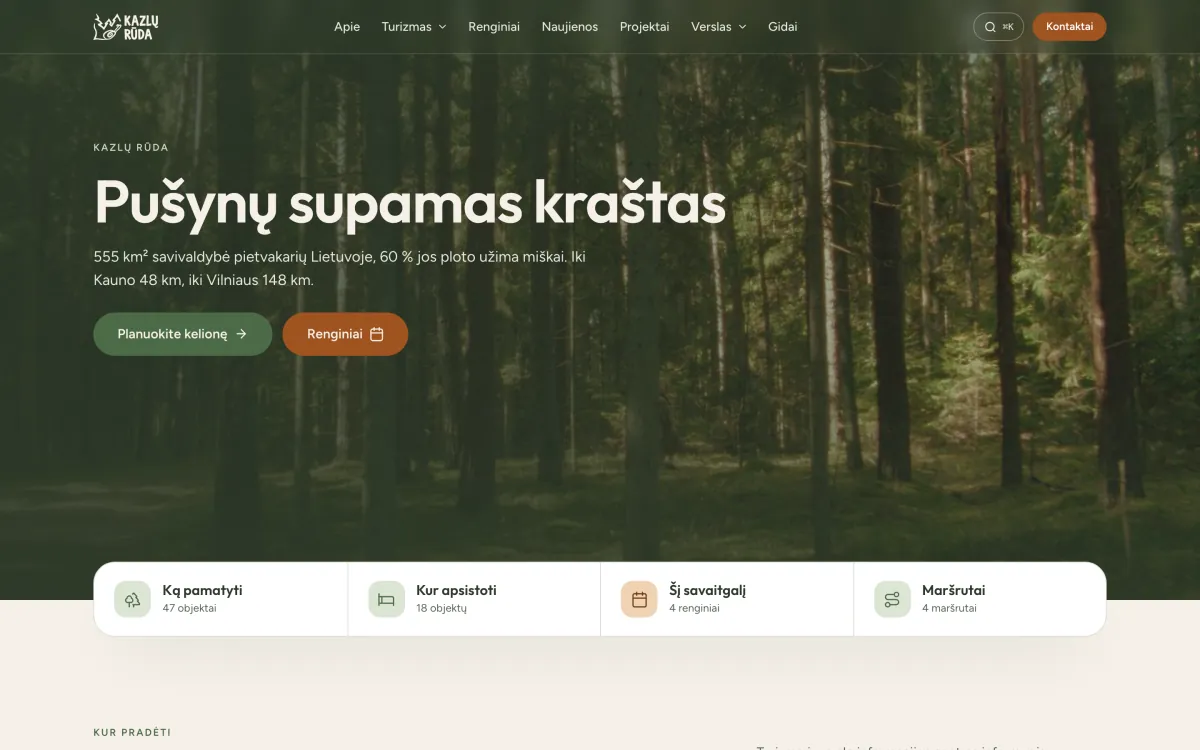
The tourism and business information centre's WordPress portal, from design to migration: 130+ places and 1,300+ events held as data, an interactive map, GDPR consent and a site the centre edits itself.
1,300+ eventsand 130+ places the centre adds itself, without us
In short
- Design by us: text that stays readable over photos and buttons a thumb can hit
- Content: places and events are stored with address, coordinates and hours, so filters and the map work
- Map: the places to visit, with a data integration to the municipal website
- GDPR: before the visitor agrees, no analytics and no map tiles load, so nothing is tracked without permission
- A migration without losing SEO: the old URLs still work, so Google results and the QR codes on signs do not break
Related services
Screens
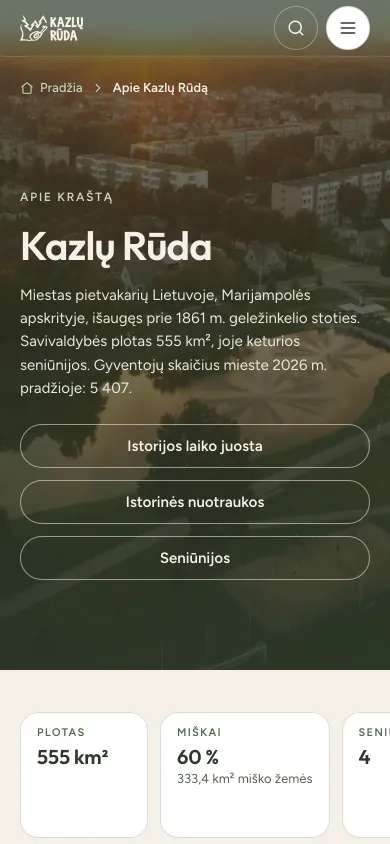
How it looks.
How it was built
The work.
WordPress site design and accessibility
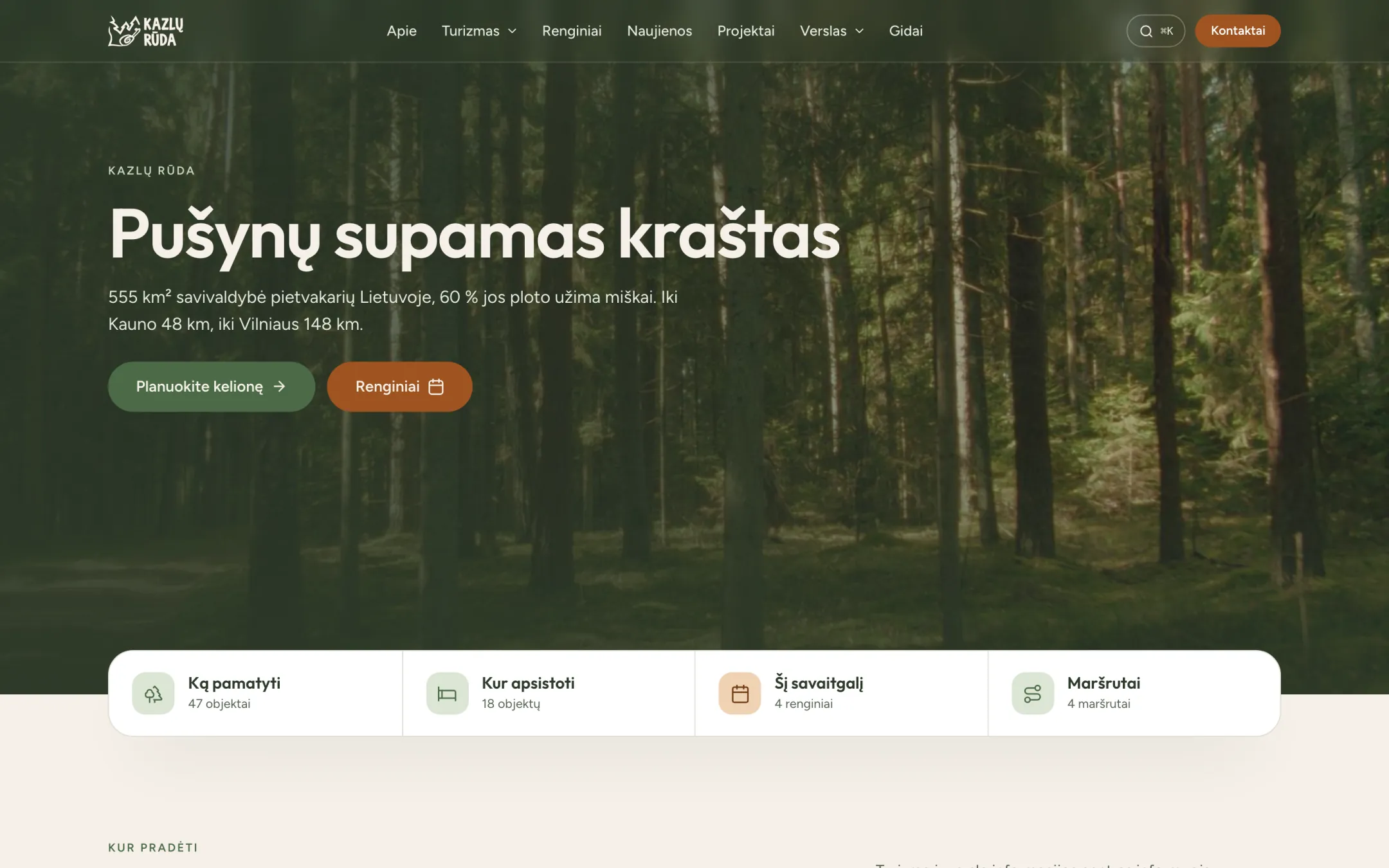
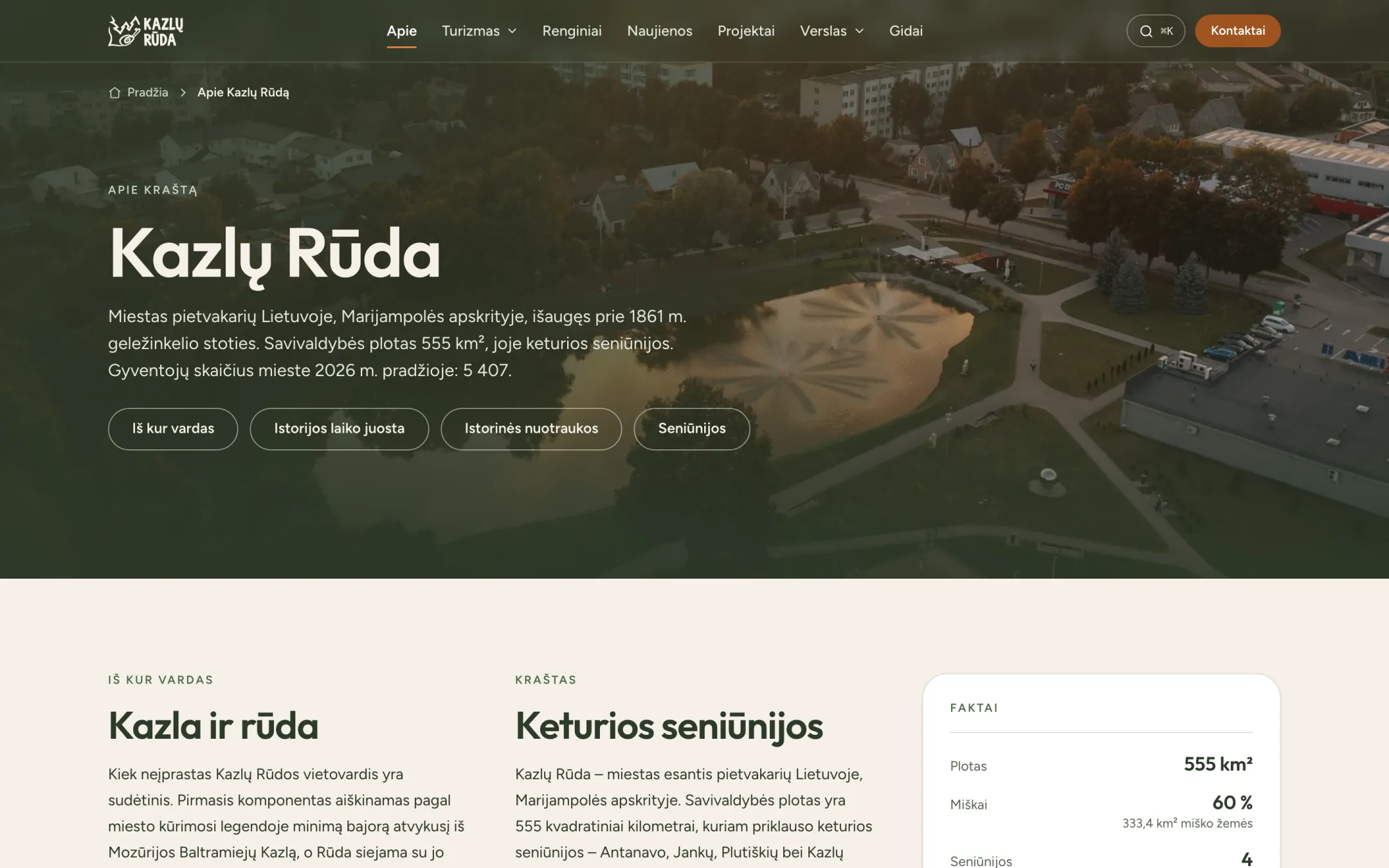
The design is ours, from the colour and spacing system to states, search and error screens. Every repeating block was designed as a ready-made block the editor drops in, so what was drawn is also what they find in admin.
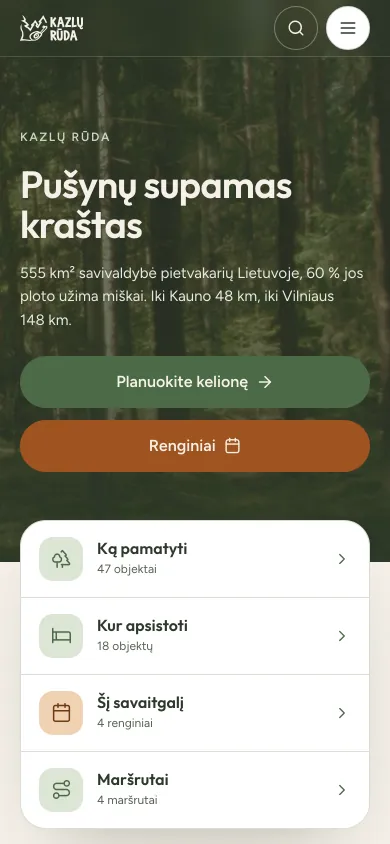
Accessibility was written down as a rule, not a wish: WCAG AA contrast (the international accessibility standard), buttons a thumb can hit, no information that only appears on hover, no state carried by colour alone. Text over photos was checked on desktop and phone screens, so the heading and lead stay readable over any frame.
Content that is data
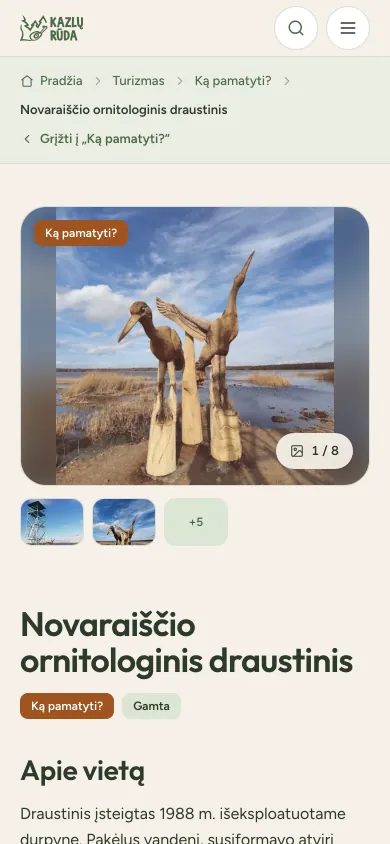
Places, events, routes and projects are stored not as text but with fields of their own: address, coordinates, opening hours, price, contacts, gallery. The editor fills in a clear form, and the site builds lists, filters and the map from the same data.
Everything else rests on that. Filters by type and tag, the map, an “open now” badge on a place: none of it is possible while an address is just a line at the bottom of a page. The content does not depend on the design, so a future redesign will not lose a single place.
Events, the map and the data integration
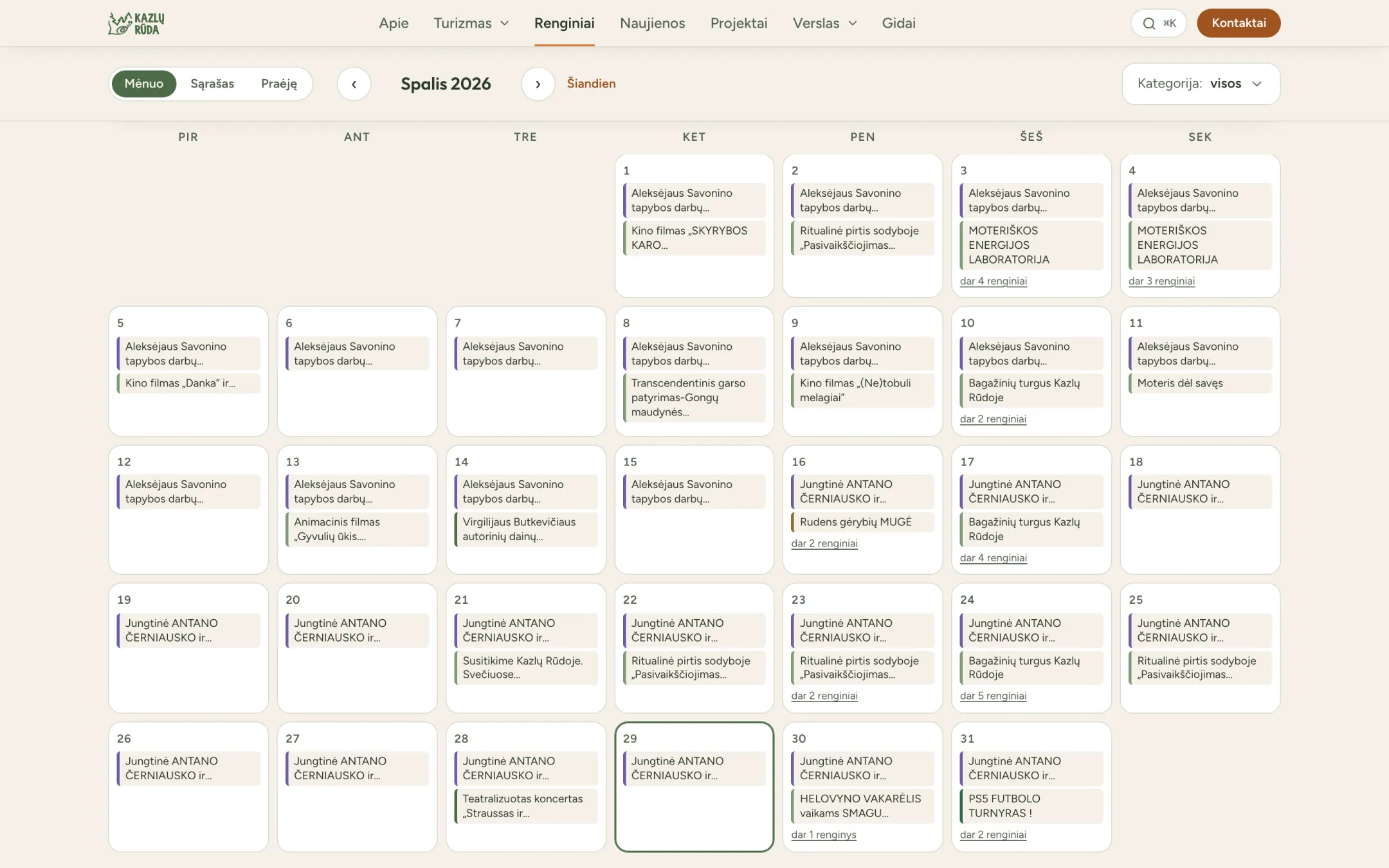
A recurring event shows up on each of its days, so the “this weekend” strip, the month calendar and the “add to calendar” button that drops an event into a phone all work. More than a thousand events open without a wait.
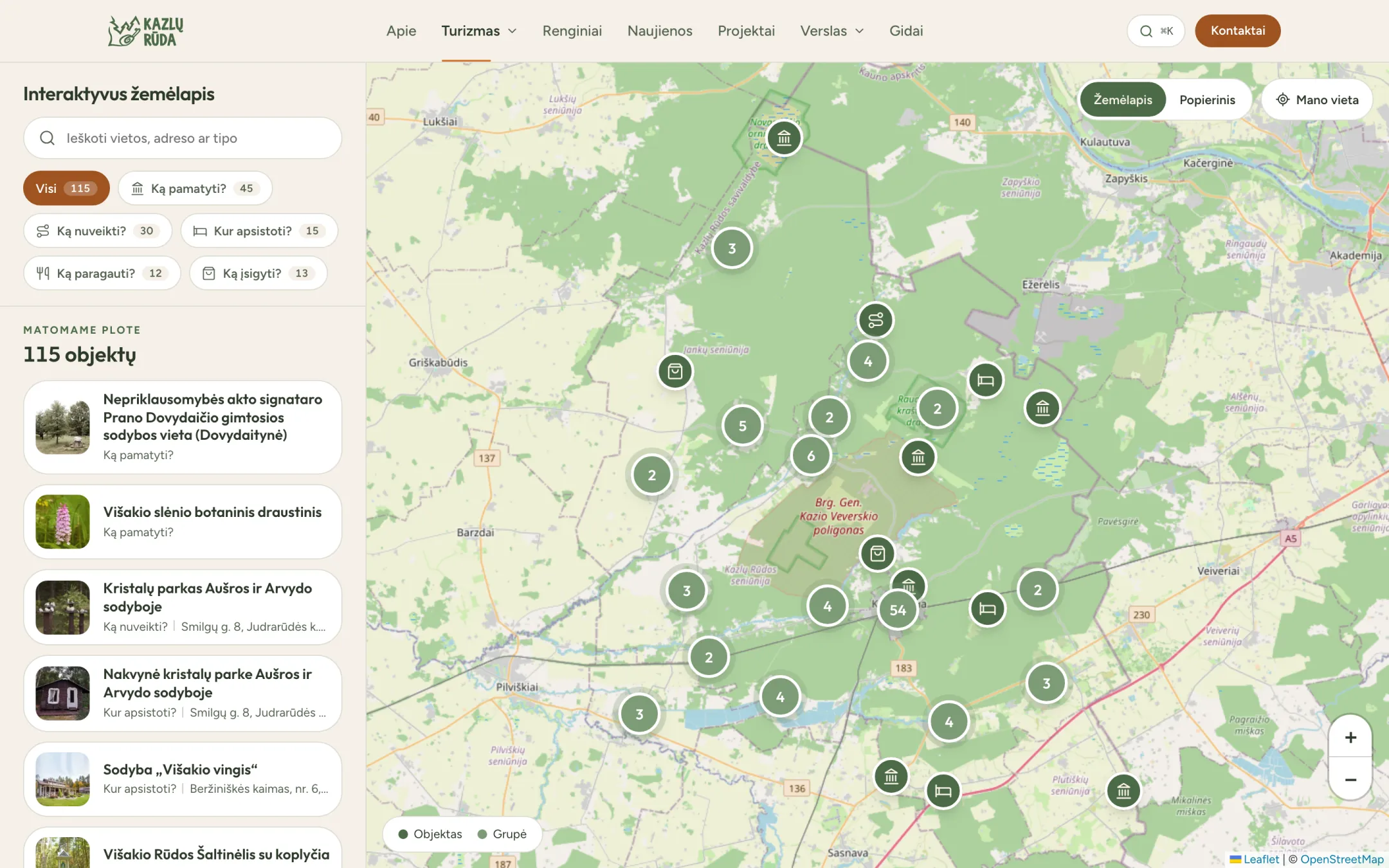
The map shows every place there is to visit. A data integration also passes places and events to the municipal website, so a visitor finds the same information on both. A route loads into phone navigation, and the site speaks Lithuanian, English and Polish.
A site the centre edits itself
The editor has blocks of their own: filters, calendar, map browser, route cards, indicator tables. A new page they put together themselves, with no developer.
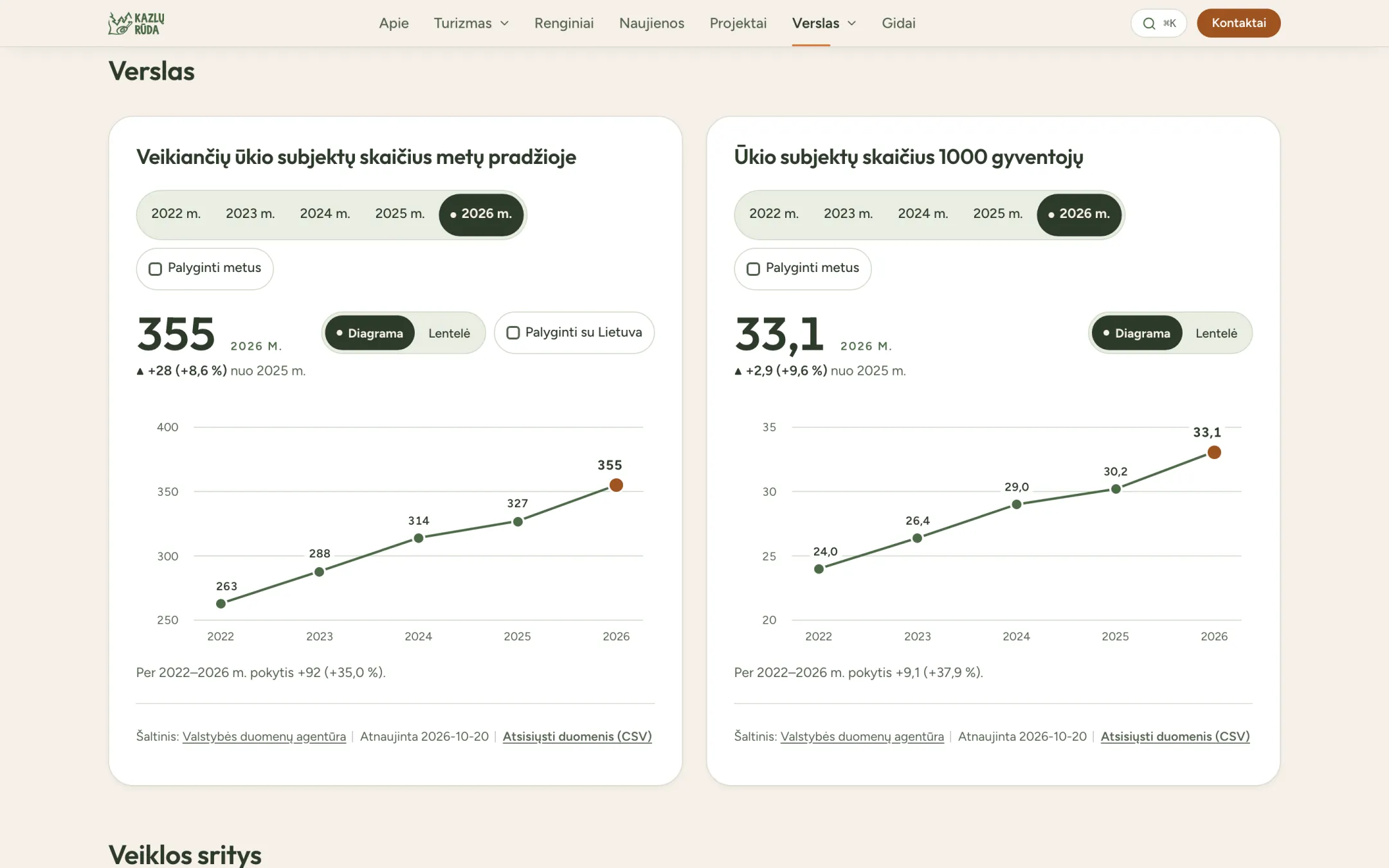
The centre updates the business dashboard's indicators itself, without us. The handover includes an illustrated guide, and when the admin interface changes, its screenshots are updated with it.
GDPR consent, forms and SEO
GDPR and cookie consent is set up so that before consent the site loads no analytics, no map tiles and no other third-party resource. Analytics starts only once allowed, and even then without advertising consent, the cookie policy describes every cookie we measured, and the privacy and cookie pages were written together with the site.
Forms are protected against spam, while a real enquiry reaches the centre. Structured data is generated from real fields rather than from text, so Google reads the date, the address and the route length instead of guessing. The sitemap holds every page, and every one of them opens.
Website speed and old URLs after the migration
Pages open practically at once, yet speed does not cost accuracy: the event list shows today's events, and the “open” badge flips when a place closes. The map stays light on a phone too, and Google's mobile website speed score on a place page is 95 out of 100.
The old URLs either redirect to the new place or open as they are, and every one was checked. Among them are URLs from heritage plaques with QR codes on buildings: you cannot reprint a sign, so the URL has to stay alive. All the content was moved over, with no duplicates.
How to order a similar project
Have content that needs to become data: places, events, a catalogue or a register? We start from what the site has to filter and show on a map. That sets the field list, and the field list sets the scope and the price.
We do this kind of work as a WordPress site renewal: from design through migration, so there is no separate designer to find. Tell us who will edit the content and which sections are required at launch, and we will agree the scope, the stages and the estimate. Get in touch.