A B2B SaaS WordPress website from the client's design.
An English WordPress site for an experience management platform, from the client's design: pages and a blog, with the header, footer, FAQ and forms built to order. Old addresses lead to the new ones, and consent is closed by default.
Every old addressredirect to new ones, so old links and search results never end in an error
In short
- The header, footer, FAQ, demo form and content grids are built to order, not assembled from off-the-shelf blocks
- The blog and whitepapers in a section of their own, which search engines see apart from the pages
- A migration without losing SEO: old addresses lead to the new ones, so old links never end in an error
- Consent is closed by default: not one request goes out before the visitor acts
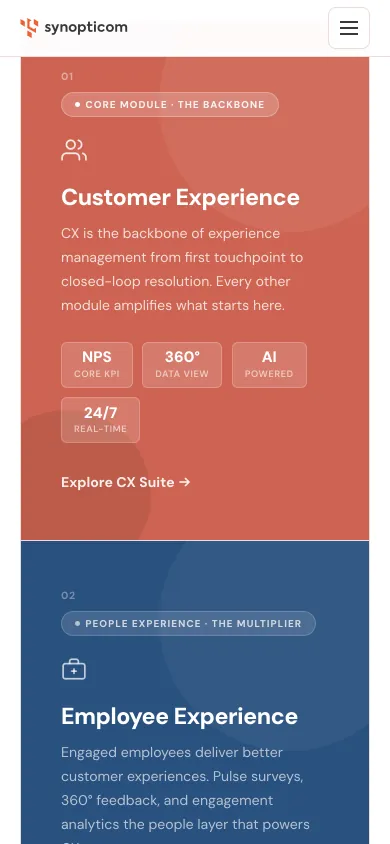
- The menu on the phone: the groups, log in and the demo button in one view
Screens
How it looks.

How it was built
The work.
An English WordPress website for an experience management platform
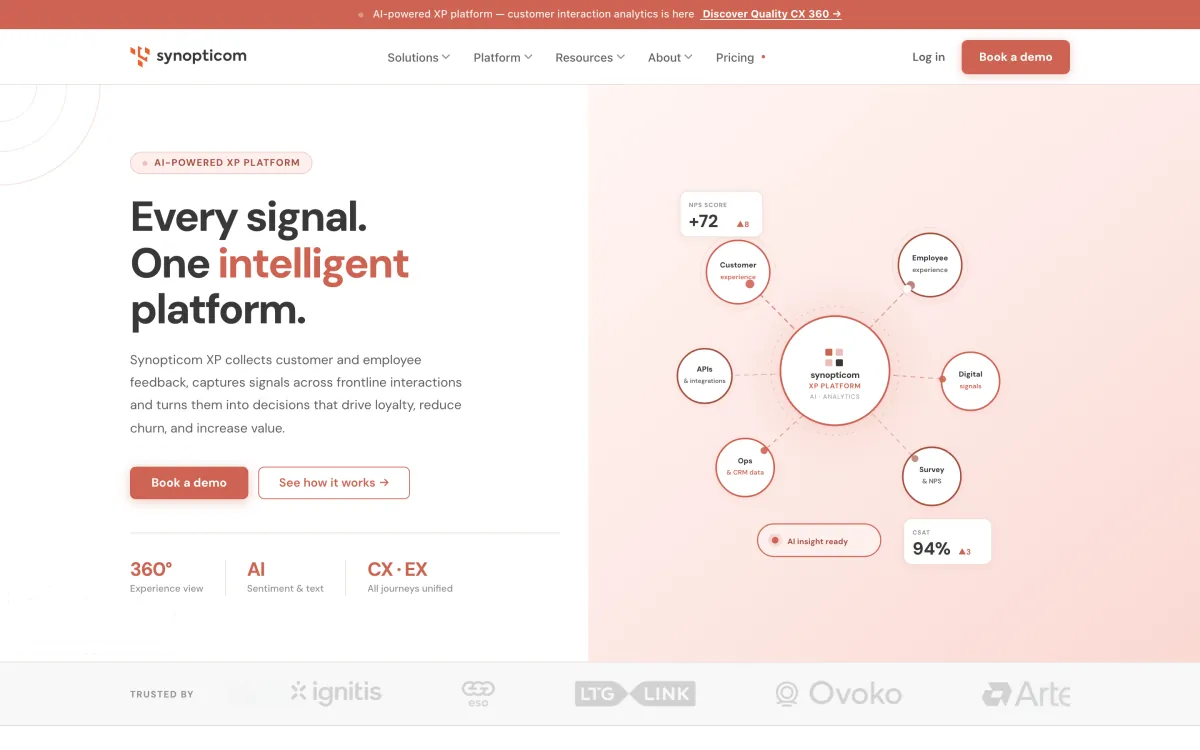
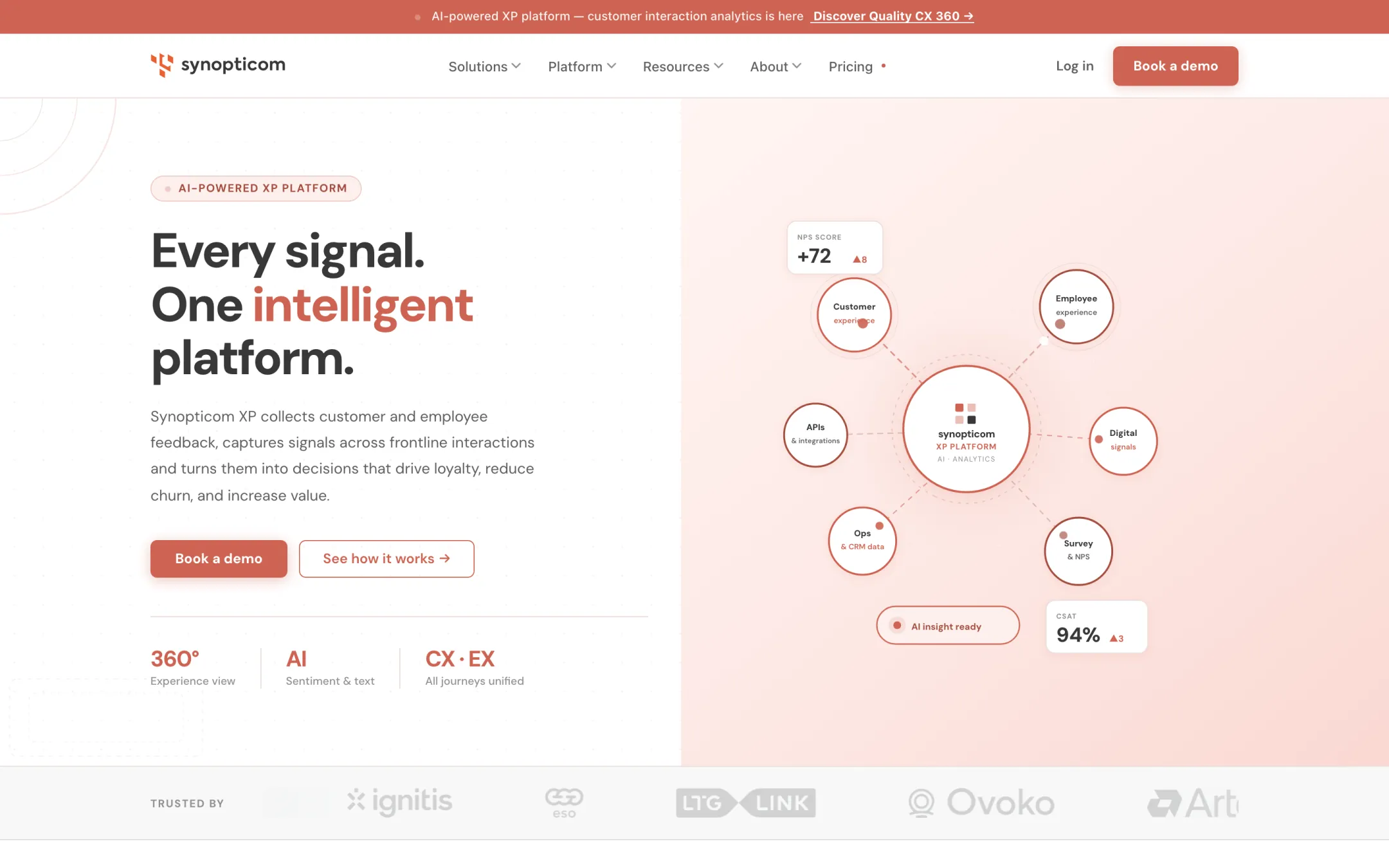
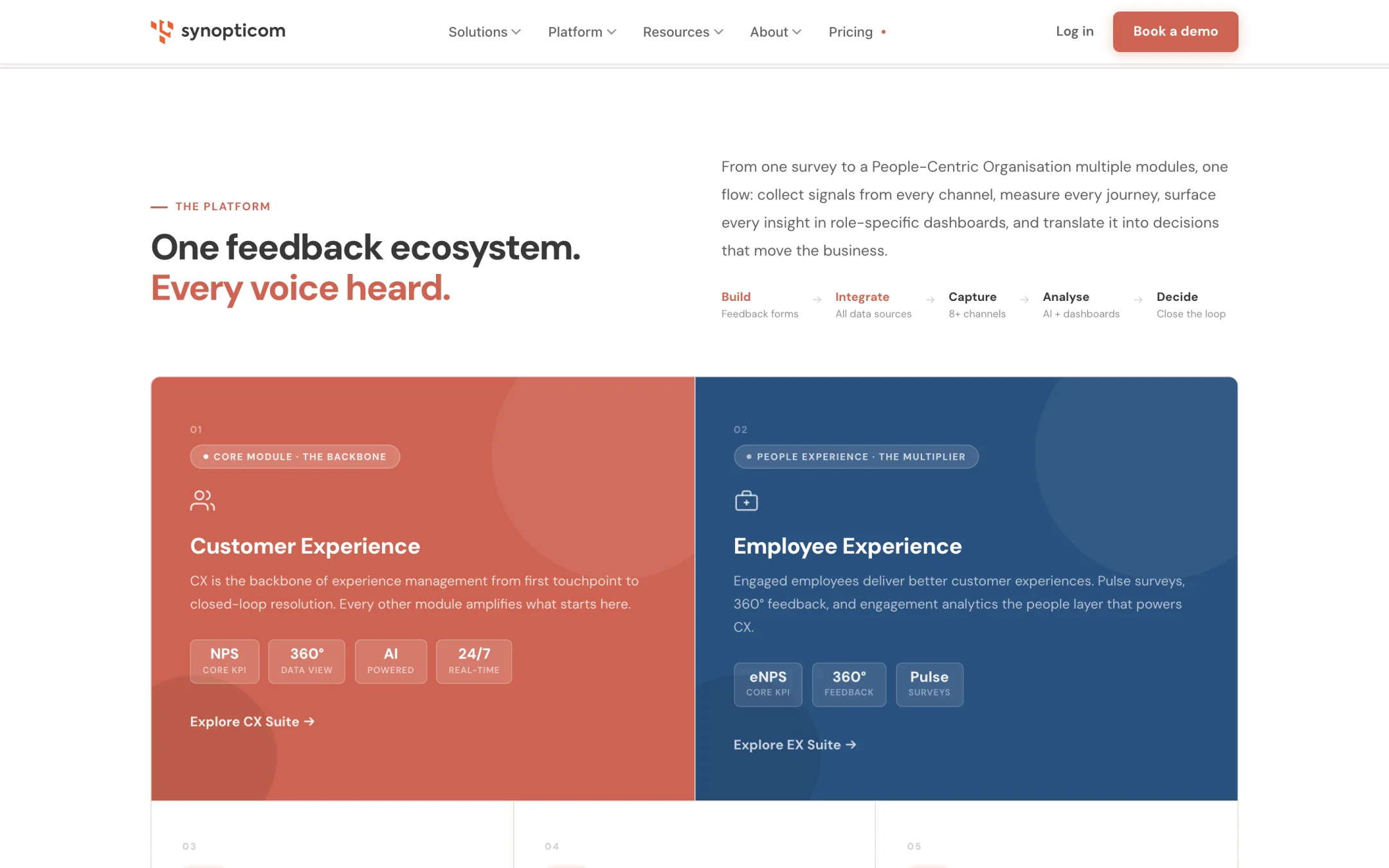
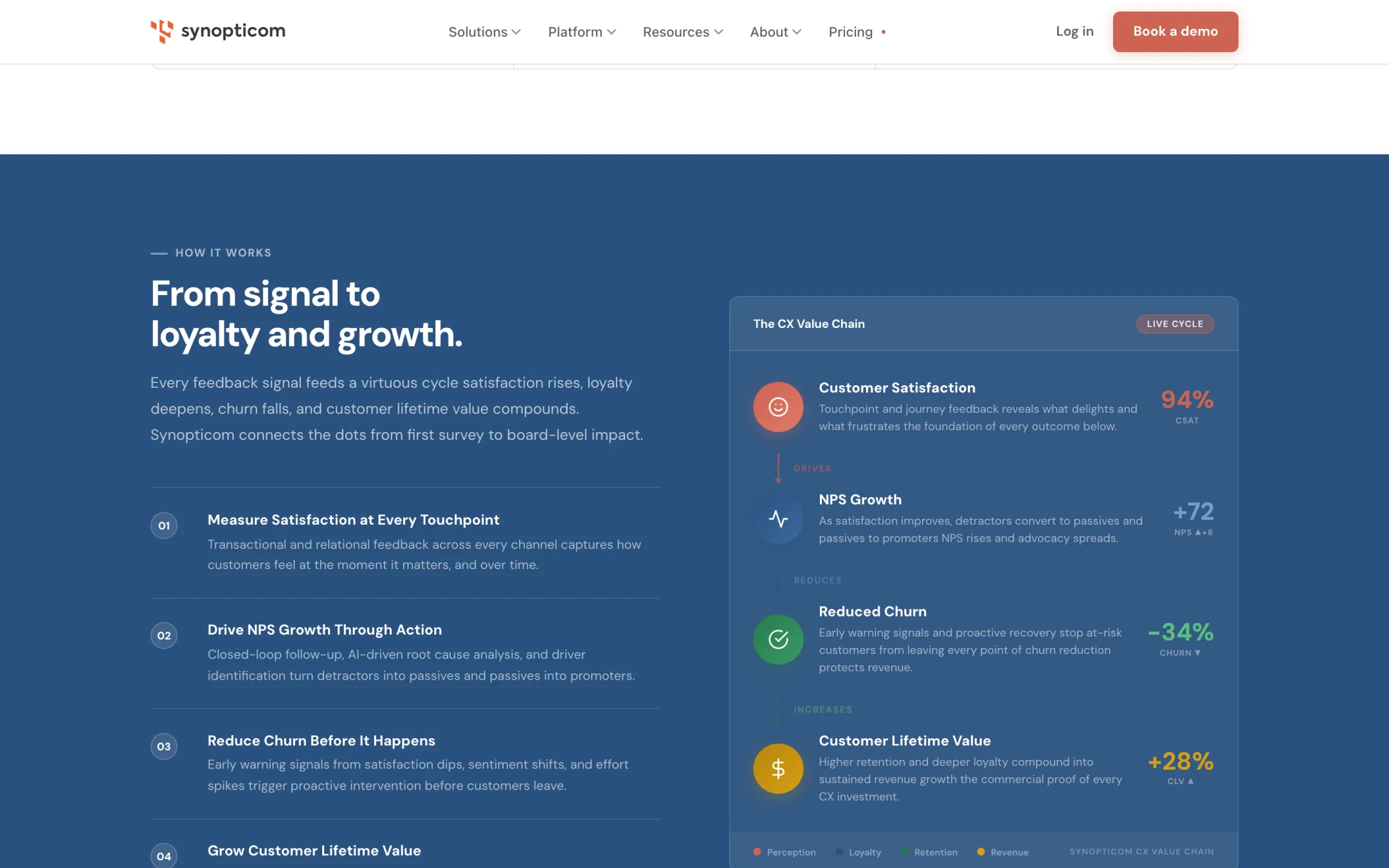
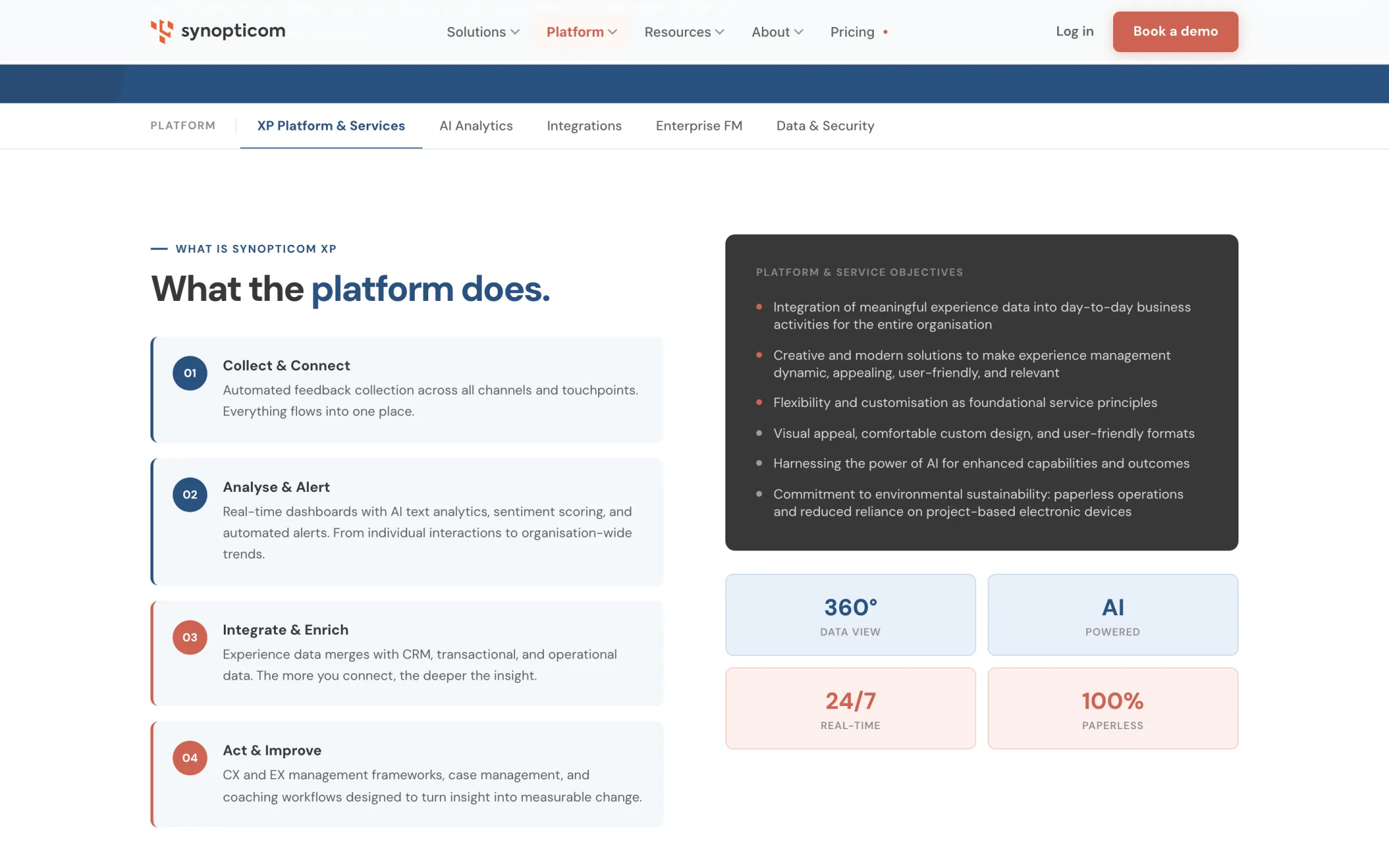
Synopticom sells an experience management platform: customer and employee surveys, interaction analytics and quality auditing in one place. The site is entirely in English, written for business buyers in banking, telecoms, energy, retail and the public sector. The menu is split into groups by what the buyer looks for, and every path ends in the same action, a demo request.
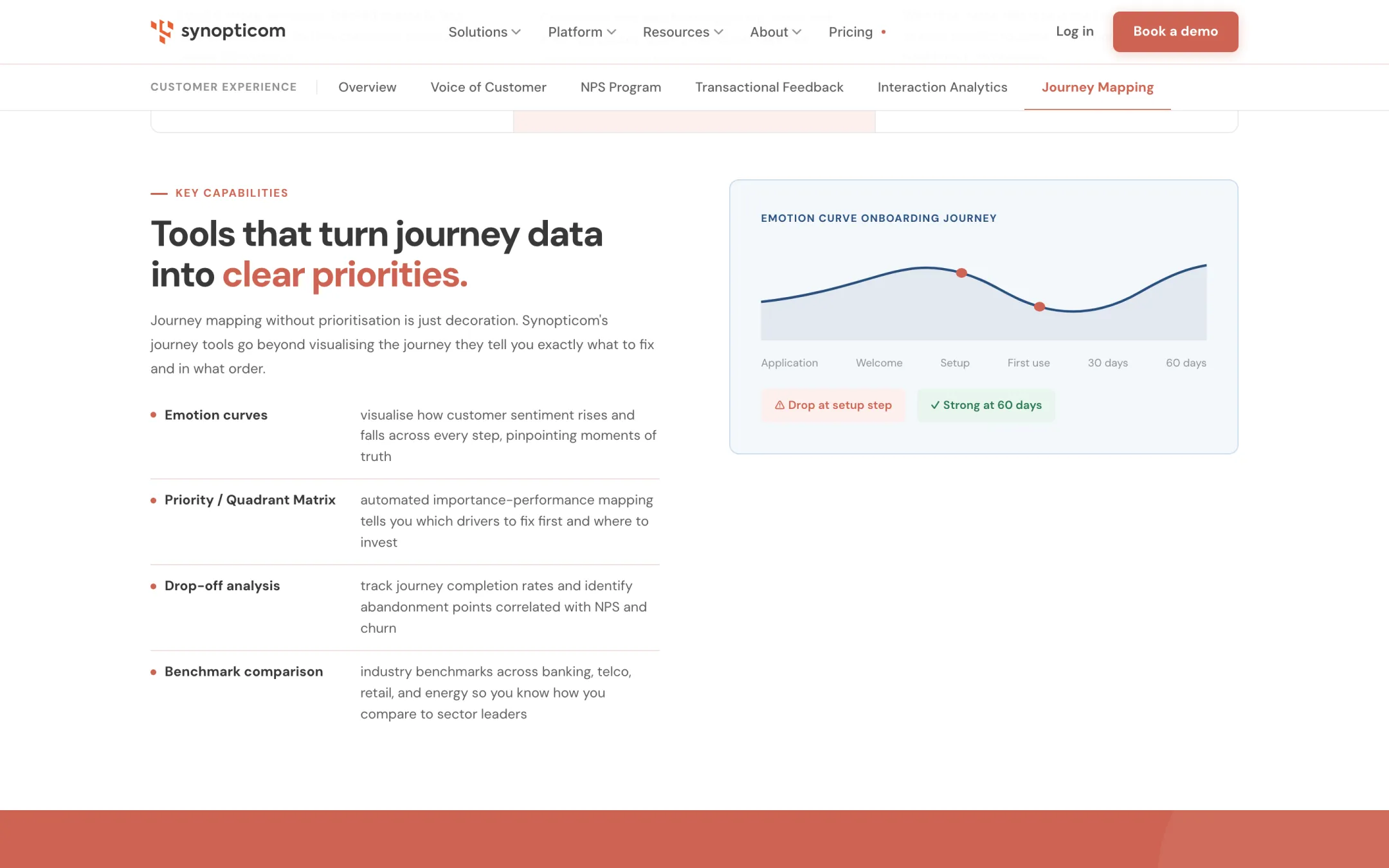
Every page on the site opens, and there is not one broken internal link. The larger sections carry a sticky bar of their own, so you can move between the pages of a section without going back to the main menu.
WordPress blocks built to order
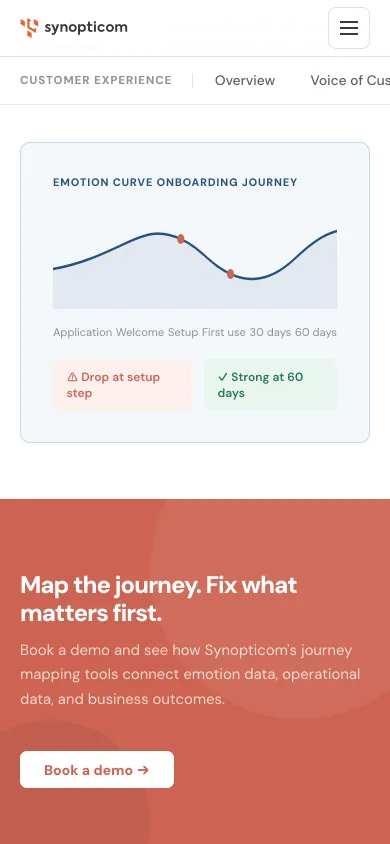
Everything the off-the-shelf blocks do not give is built to order: the header, the footer, the page opening, the demo request form, the contact panel, the FAQ and the content grids. The header and footer come from that same place on every page, so the menu is changed once rather than page by page.
Plain content the owner lays out themselves, and a block built to order is used where the logic matters, not the layout. The FAQ groups the questions and shows the answers without an extra click, the whitepaper and blog grids collect their entries themselves, and the demo form asks for one field, a work email.
The blog and the whitepapers in a section of their own
The blog does not sit among the ordinary pages: it has a section of its own, so search engines see the posts apart from the pages. Each card carries a category, a month and a reading time, and the list builds itself, so a new post needs no hand placing in the grid.
The resources section brings together metrics, case studies, whitepapers, the blog and the FAQ. A card in the whitepaper grid can stand there before release, marked “Coming soon” with an invitation to register interest. Below the grid sits the subscribe panel with a consent checkbox of its own and a link to the privacy policy, so an email address is taken only when someone ticks it themselves.
A migration without losing SEO: old addresses lead to the new ones
The new site is split into sections, so the addresses changed. As in every WordPress site renewal, each old address was redirected to its new place and checked live, so the rankings would not go missing. The short addresses without a section lead where they should too.
The blog posts moved the same way: an old post address leads to the same post in its new section. The domain is settled on one form too: with or without www, a visitor lands on the same page.
GDPR consent and analytics, closed by default
The cookie consent banner is on every page, and the opening state is closed: analytics and advertising are off until the visitor acts. Until then nothing is sent anywhere, and each category opens on its own, only once consent is given for it.
The legal side is gathered into pages of its own: the privacy policy, the terms and the cookie policy. The subscribe panel has its own consent checkbox with a promise that you can unsubscribe from any email, and the demo form asks only for a work email. Fewer fields mean less data and less to keep safe.
How to order a similar project
If you have a design and clear requirements for SEO, content and data protection, we start with two lists: the pages and the blocks. Between them you can see where off-the-shelf blocks are enough and where one built to order is worth it. If the addresses change, a third list appears: each old address and where it should lead.
We do a project like this as WordPress website development from your design. Tell us how many pages and languages, who will handle the content after launch, and whether the old site holds rankings in Google. We quote after a short scope. Get in touch.