WordPress site for SIP and CLT construction in Australia.
An English WordPress site for the Australian building industry: two sections for two panel systems with coded diagrams, a project catalogue with filters and a page for every build, and an enquiry form that swaps its fields depending on who is writing. Every figure carries a source.
Figures with sourcesbehind every claim, so a builder can check it
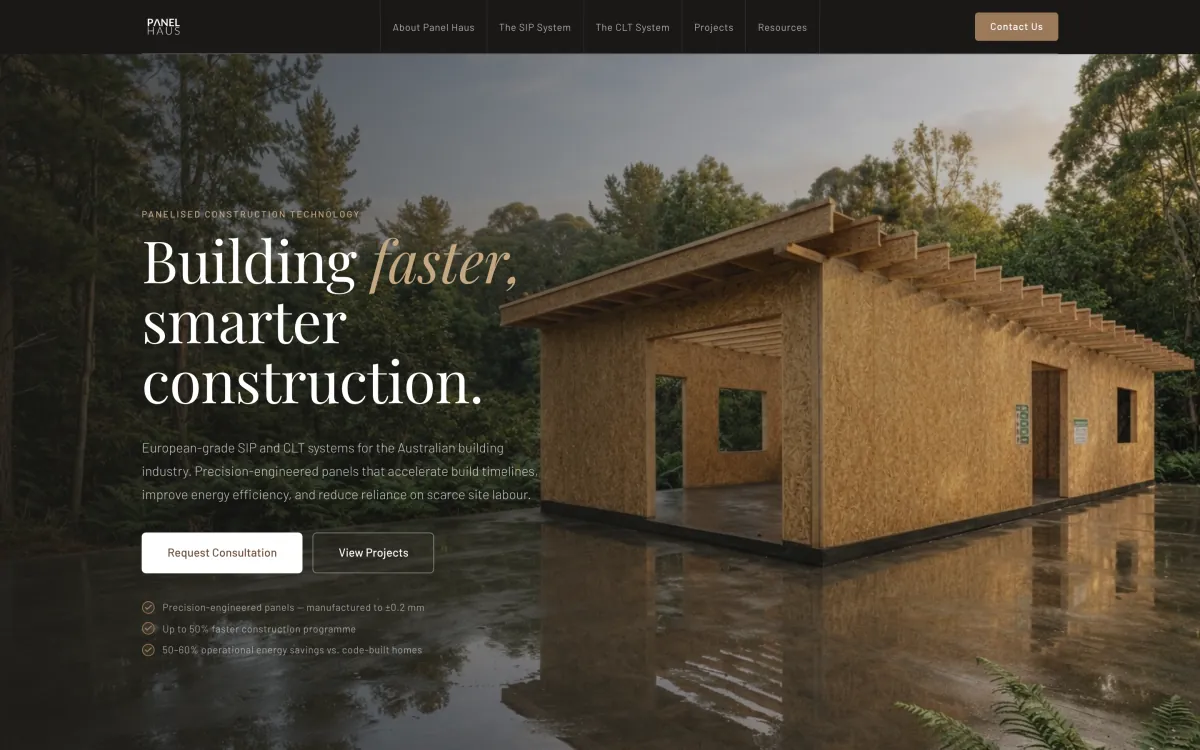
In short
- Two system sections, SIP and CLT, with panel cross-section and layer diagrams drawn in code, not as images
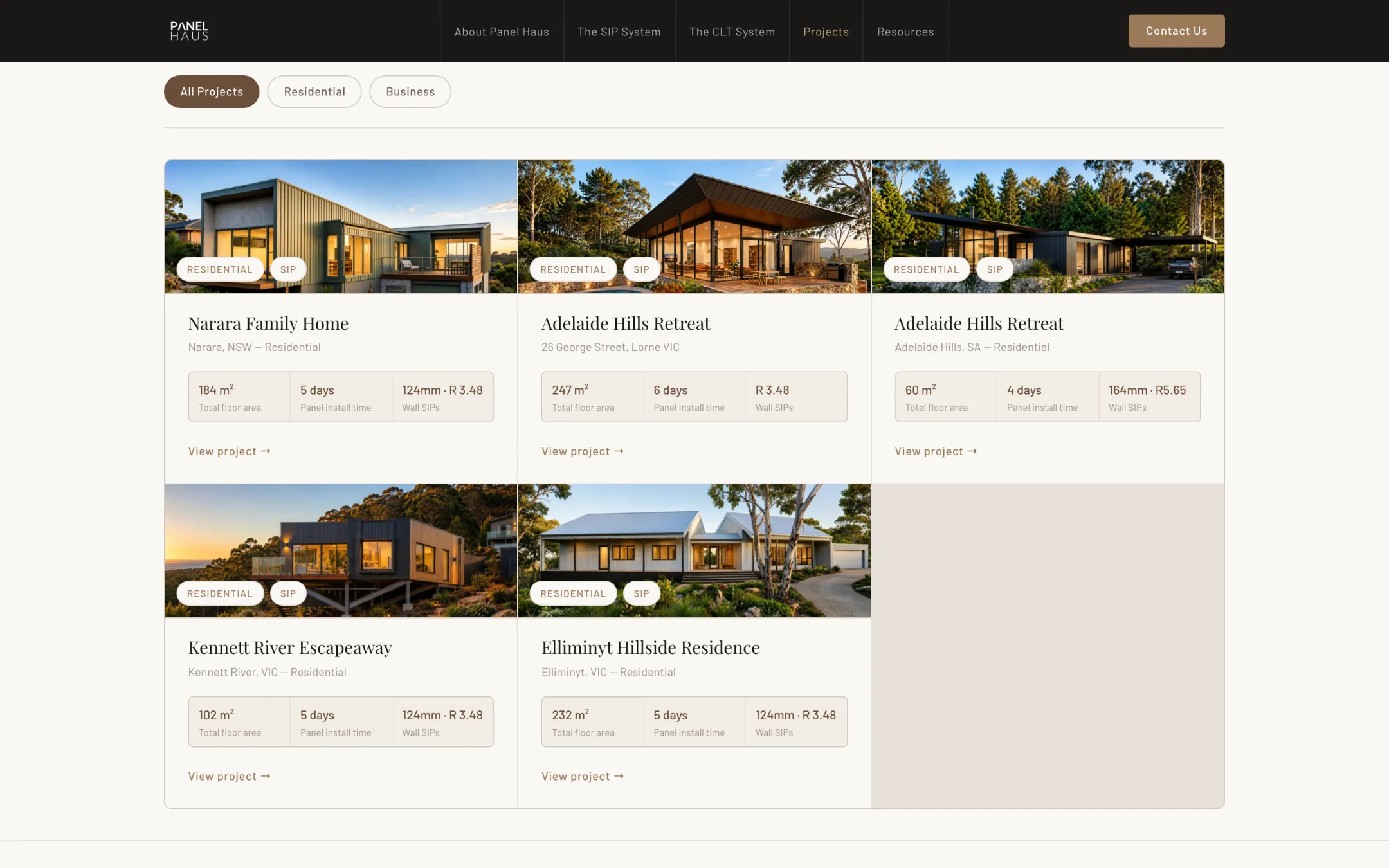
- A project catalogue with filters and pagination, and a page per build showing floor area, install time, and panel specification
- Every claim with a source: numbered footnotes in the text, the list at the foot of the page
- The enquiry form swaps fields depending on the visitor, with two buttons at the end: a quote or a consultation
- The projects grid, the thermal value bars, the FAQ and the form are built to order, not taken off a shelf
Screens
How it looks.

How it was built
The work.
Two systems, each with a section of its own
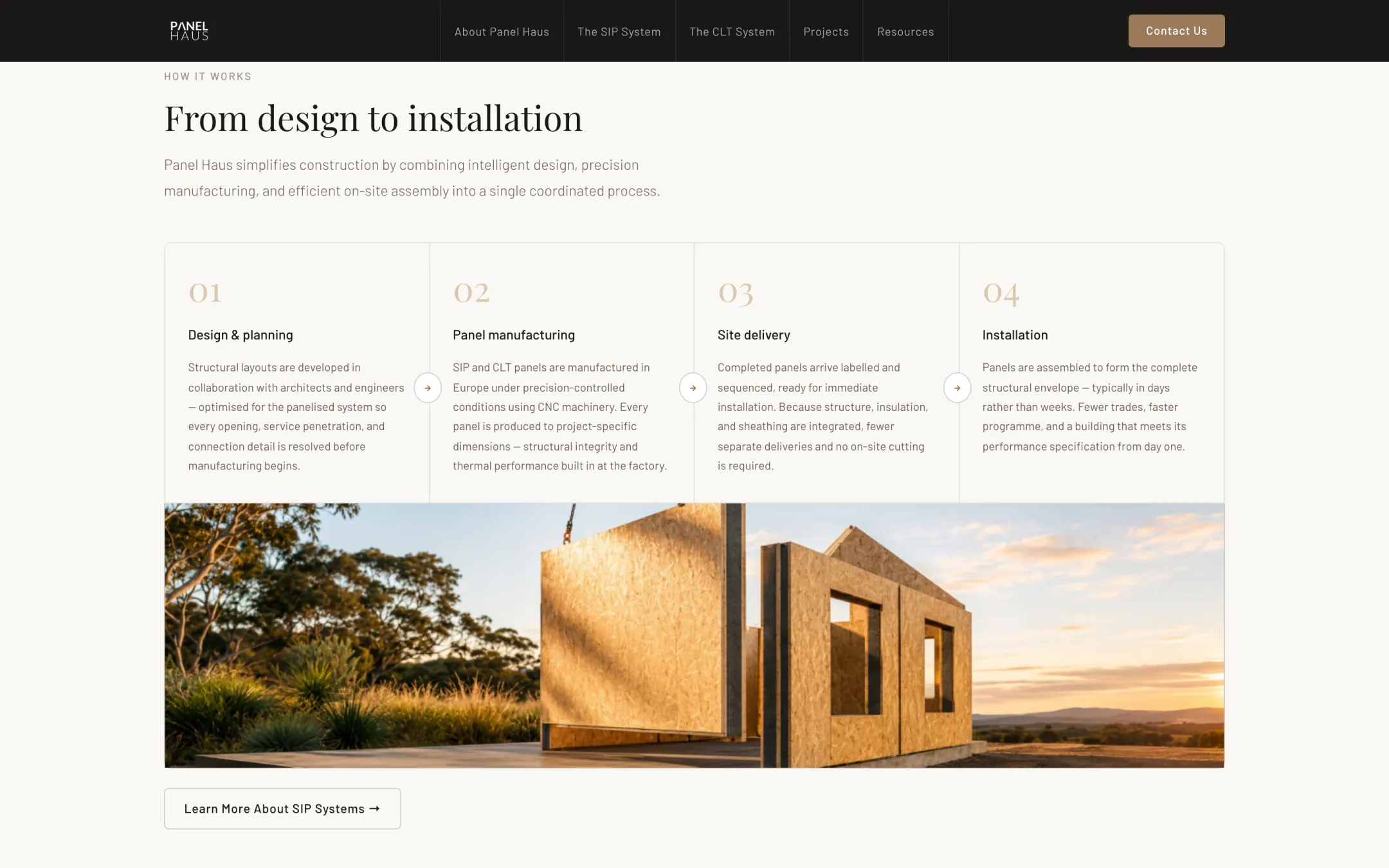
Panel Haus supplies European-manufactured SIP (structural insulated panels) and CLT (cross-laminated timber) panels to Australian builders and developers. The site keeps them in two separate sections, because the audience differs: SIP goes into residential and light commercial buildings, CLT into taller projects and longer spans. Each section opens with what the system is and ends with the installation sequence, from design to assembly on site.
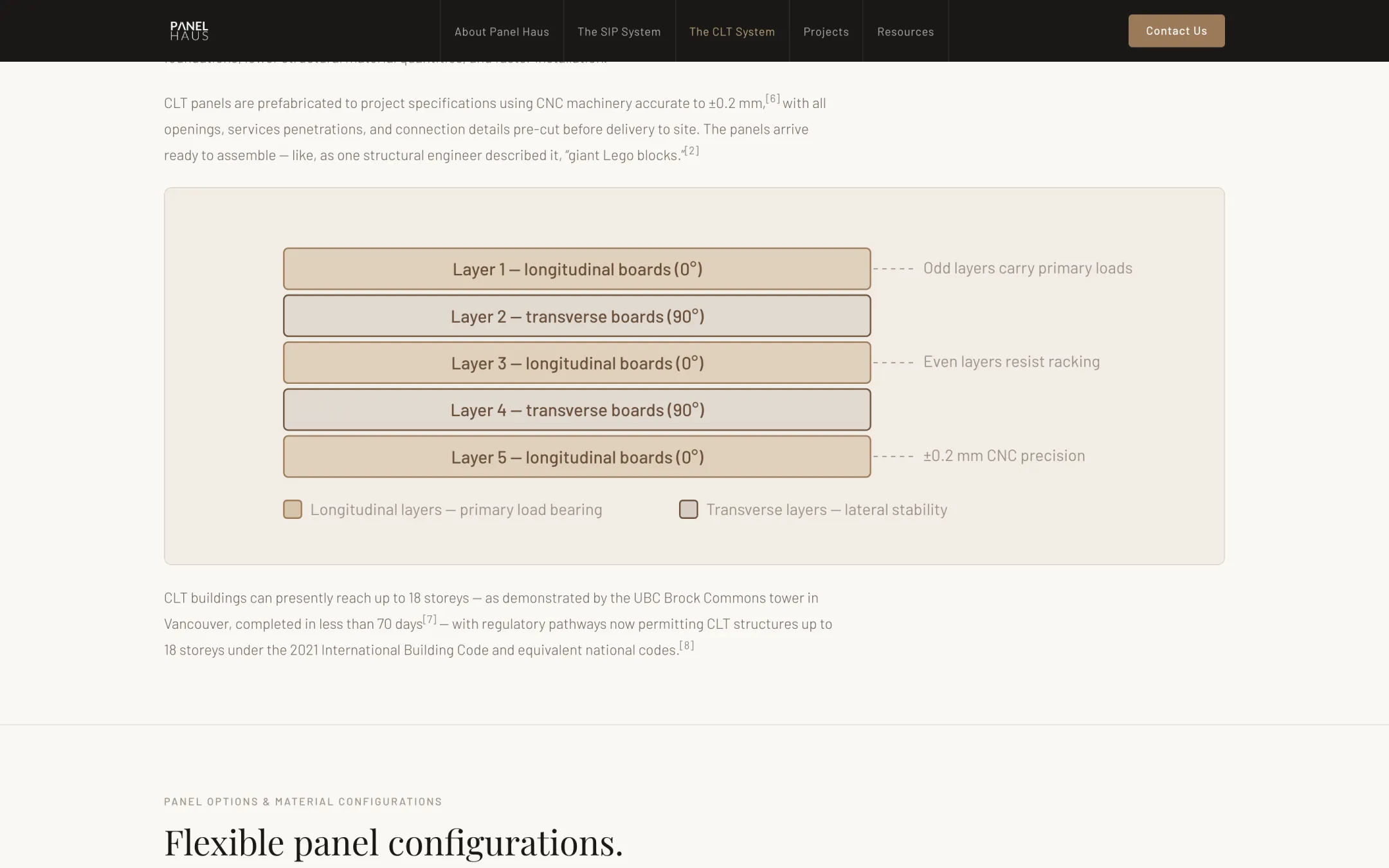
Panel construction is explained with a diagram drawn in code, not as an image. The SIP cross-section shows the facings and the continuous core; the CLT section shows the layers in alternating directions, with a note on which carry the load and which resist racking. The panel dimensions sit beside them, so a builder needs no separate document.
A project catalogue and a page for every build
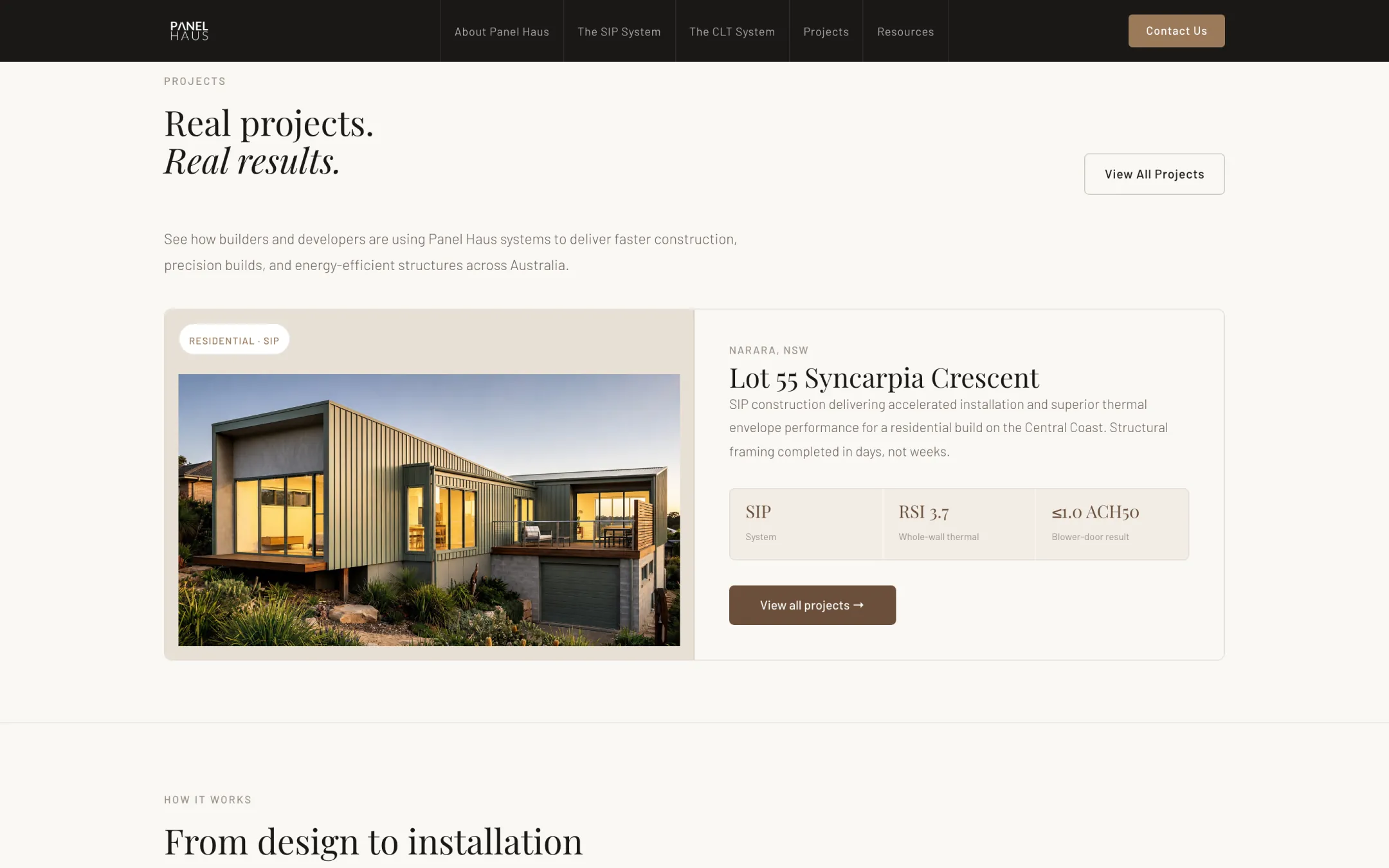
Projects sit in a grid with filters (all, residential, business) and pagination. Each card carries a photo of the build, the location, the system tag, and three figures: total floor area, panel install time, and the wall panel specification. From the list a builder sees scope, not mood.
Opening a card leads to the build's own page, with the same data band, a description, installation photos, a construction timeline table, and a specification table. Related projects and an invitation to talk sit at the foot, so a visitor moves from one build to the next instead of returning to the start. A new build appears in the grid and on its own page from a single entry.
Figures with sources
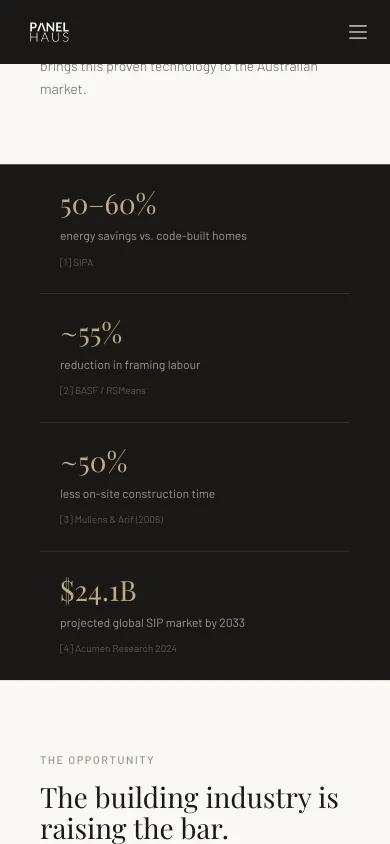
Every claim about construction speed, energy, and labour carries a numbered footnote, with the source list at the foot of each page: independent research, manufacturer data and industry body reports. A B2B reader can check each figure, and the sales conversation starts from common ground rather than an argument.
Thermal resistance is shown by bars for the wall and roof panels, with a note on how the values were verified. A bar reads faster than a table and fits a phone screen. The same block in the CLT section compares embodied carbon against reinforced concrete and steel.
An enquiry form that changes with the visitor
The form opens by asking who is writing: a builder or developer, a custom and high-performance builder, or a homeowner. That choice changes the fields. A builder gets the project type and preferred system lists; a homeowner is asked whether this is a new build or a renovation. A business client never sees questions that mean nothing to them.
After that come the project location, a budget range, the expected build start, and a short description, with two buttons at the end: a quote or a consultation. The visitor gets a confirmation straight away, and the page promises an answer within one business day and states that an early conversation commits them to nothing.
A WordPress website with blocks built to order
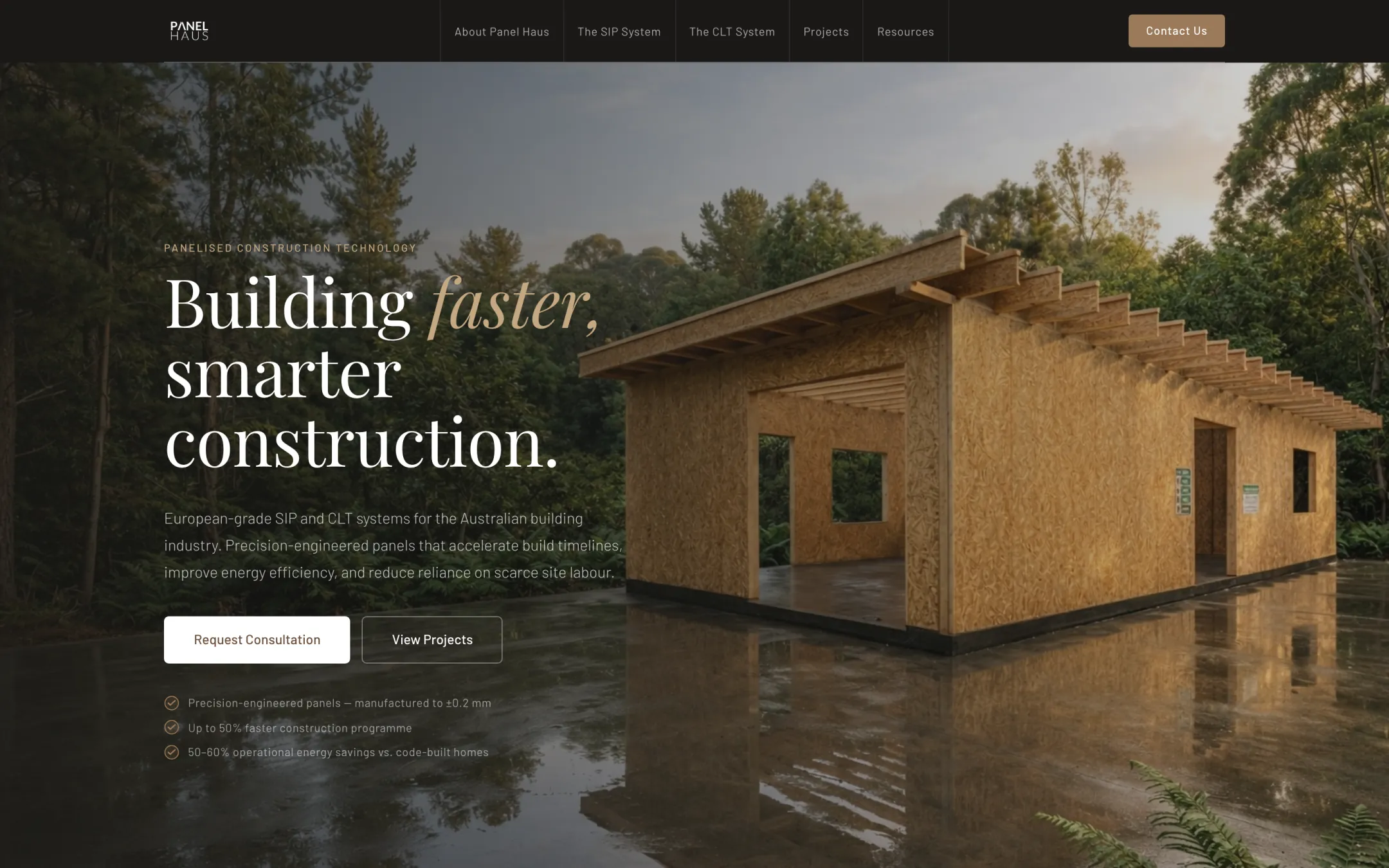
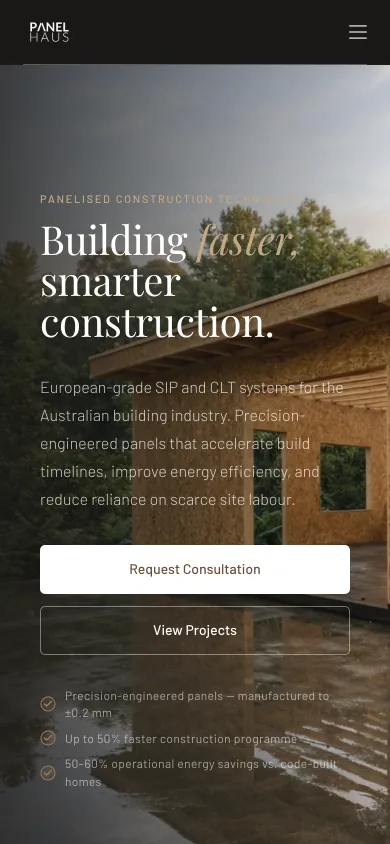
The site runs on WordPress, and everything the off-the-shelf blocks do not give is custom development: the projects grid with filters and pagination, the thermal value bars, an FAQ tabbed by system, and the enquiry form. The homepage background changes as you scroll, and that too is built to order, not taken off a shelf.
The owner runs the content: projects, documents, and FAQ entries live in the admin, so a new build or a new specification appears without a developer. On the search side the markup is in place; the typography is two faces, one for headings and one for text; technical documentation and case studies are gathered into a resources section.
How to order a similar project
If you are presenting a technical product to a foreign market, we start with two things: who reads it, and what they should do at the foot of the page. That decides how many sections are needed, whether stock blocks will do or custom ones are worth building, and how much work the content side will take.
We do a project like this as WordPress website development, in English or Lithuanian. Tell us which technologies need explaining, in what language, and who will run the content after launch, and we will go through the structure, the stages, and a quote. Get in touch.