Multilingual WooCommerce store: maintenance and custom code.
A ground screw WooCommerce store running in five languages across five domains. We maintain it and write custom code: the gift rules, the discounted prices shown in the catalogue, and the calculator's cart. Our code is kept apart from everyone else's.
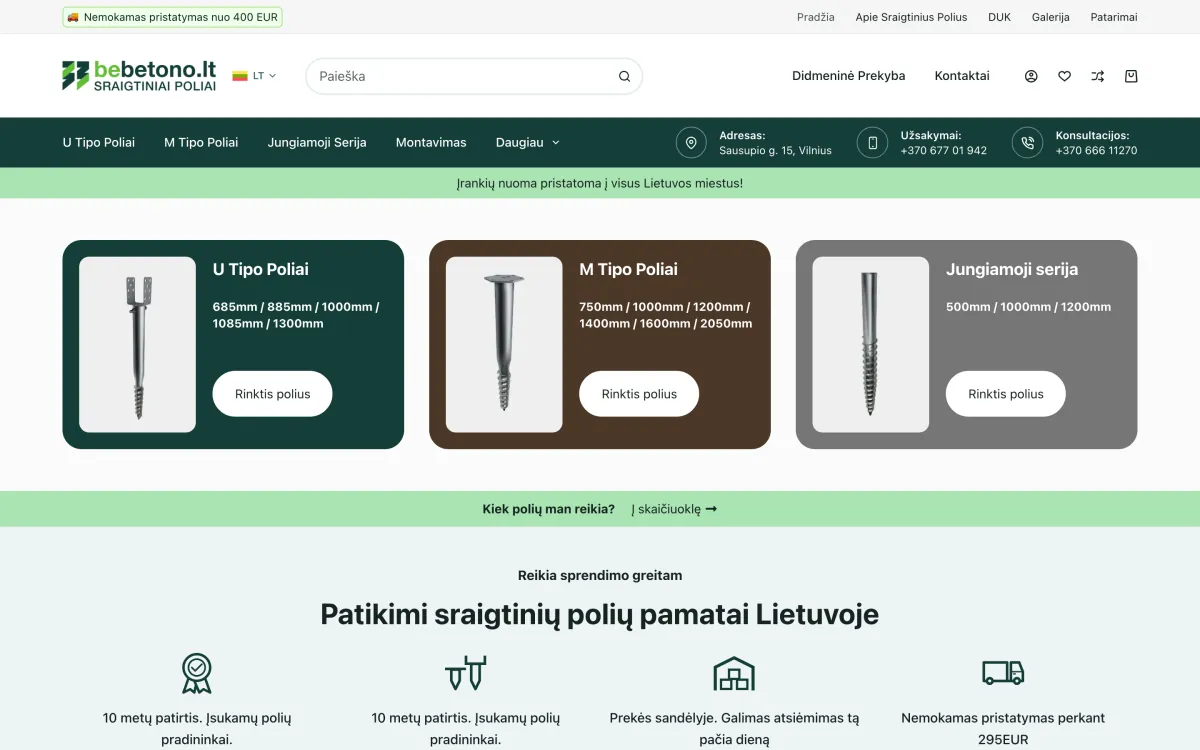
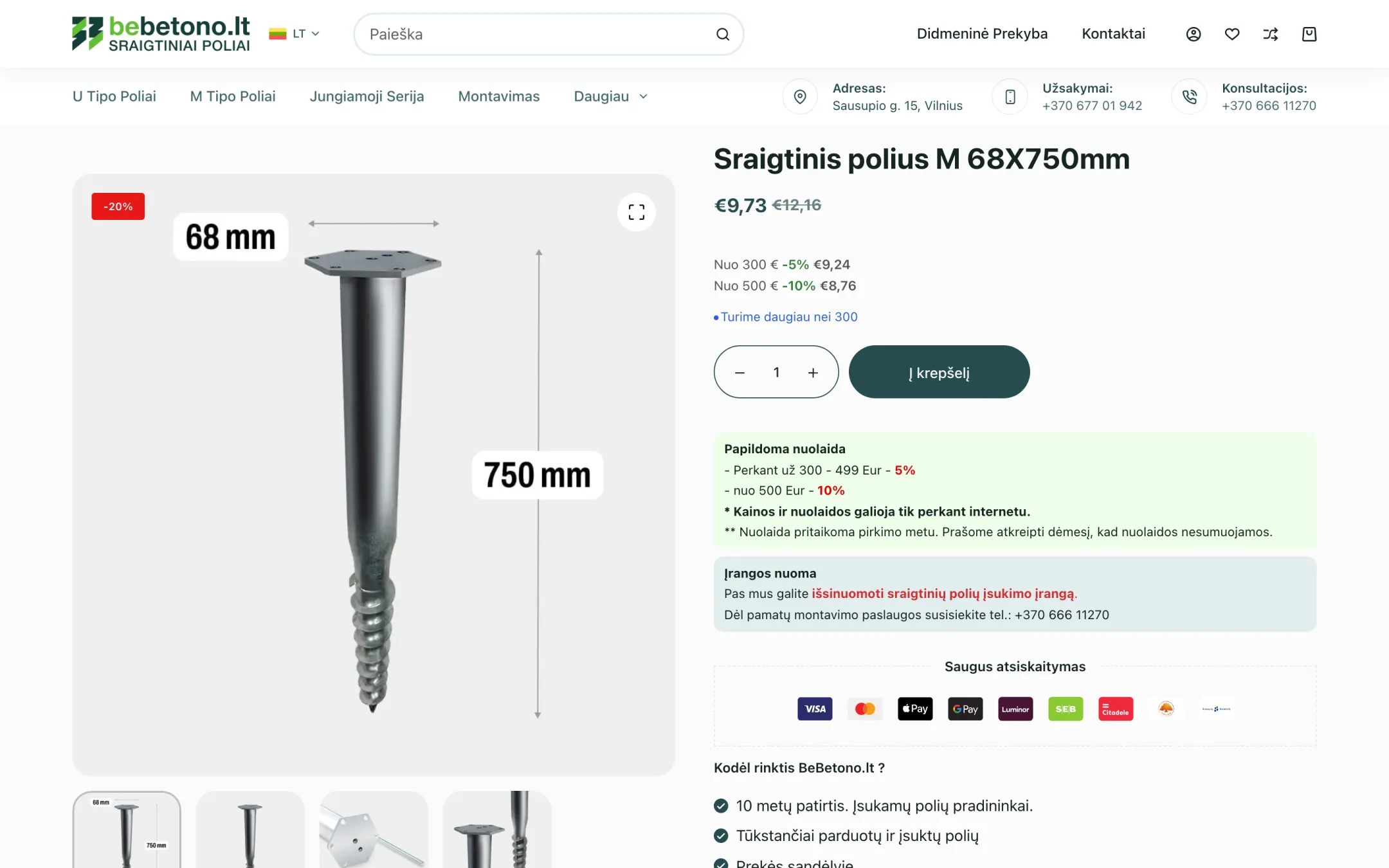
Discounts in the cataloguethe buyer sees what an item costs when buying more, before the cart
In short
- Our code is kept apart from the theme and everyone else's: every change can be traced
- The calculator fills the cart, and the store stays secure
- Gift rules: the tool rental drops into the cart by itself and for free, and the buyer can remove it
- The discount is counted from the purchase alone: the gift's price never enters the base
- Discounted prices are visible in the catalogue: under each price, what it costs when you buy more
Screens
How it looks.


How it was built
The work.
A multilingual WooCommerce store on five domains
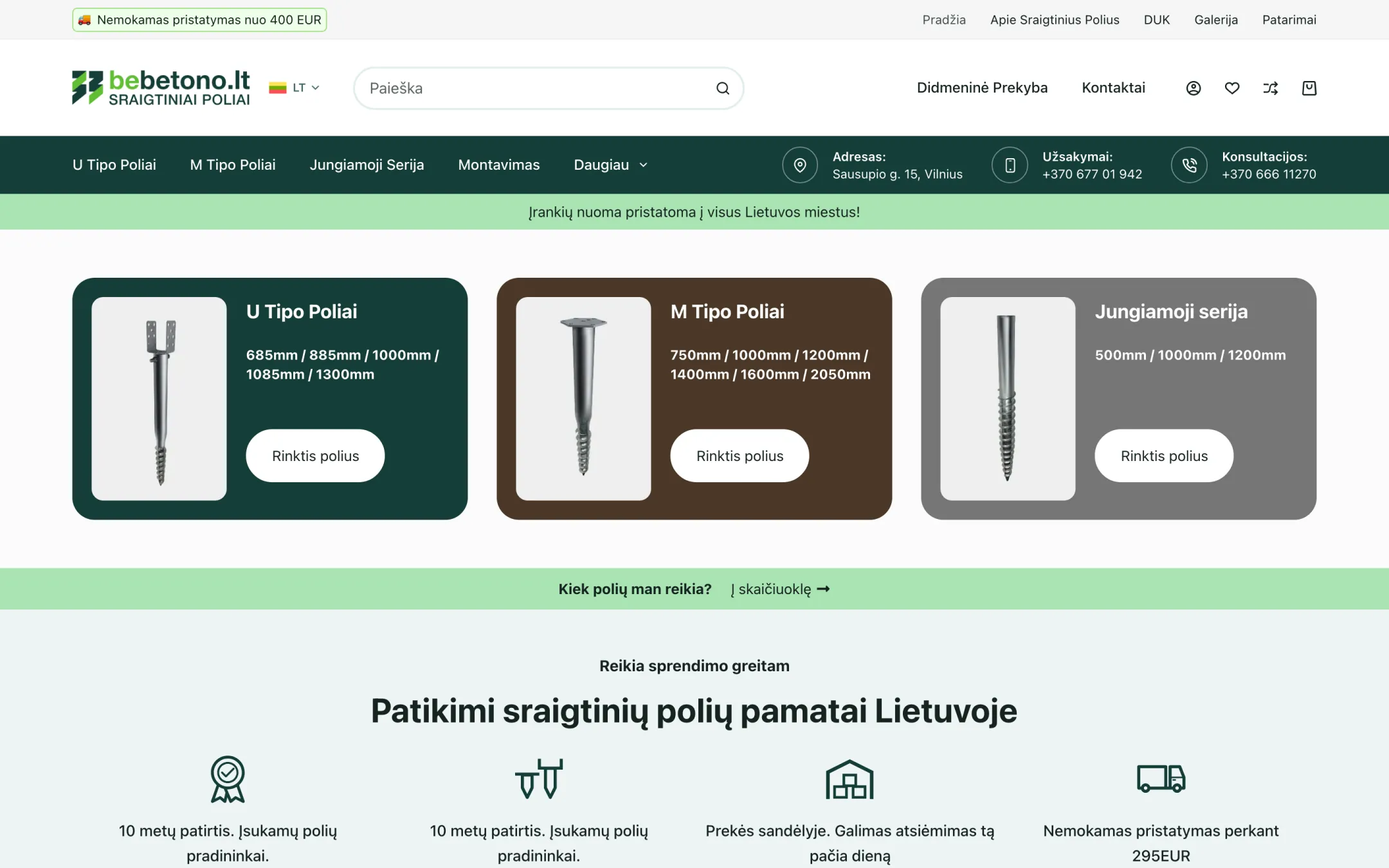
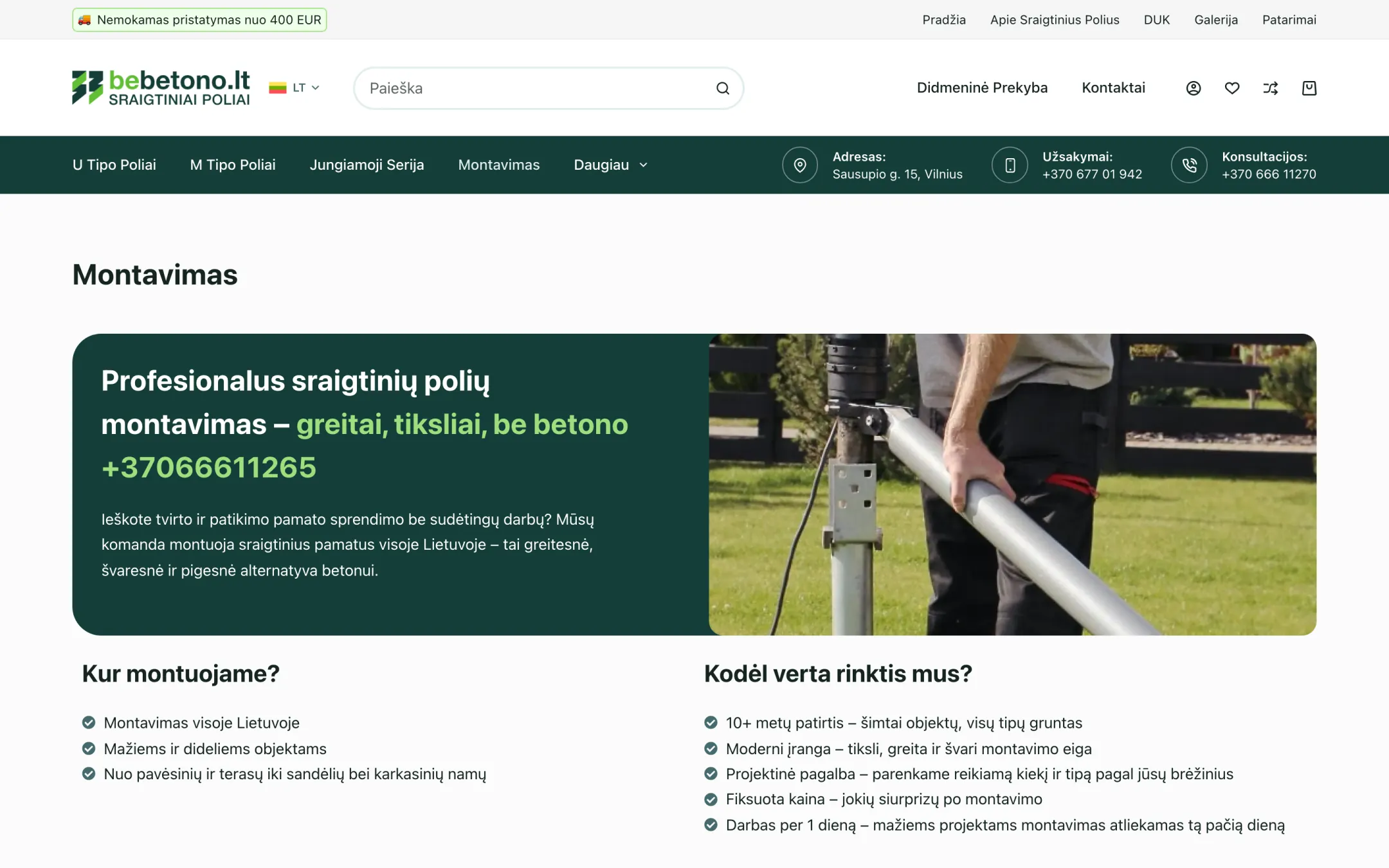
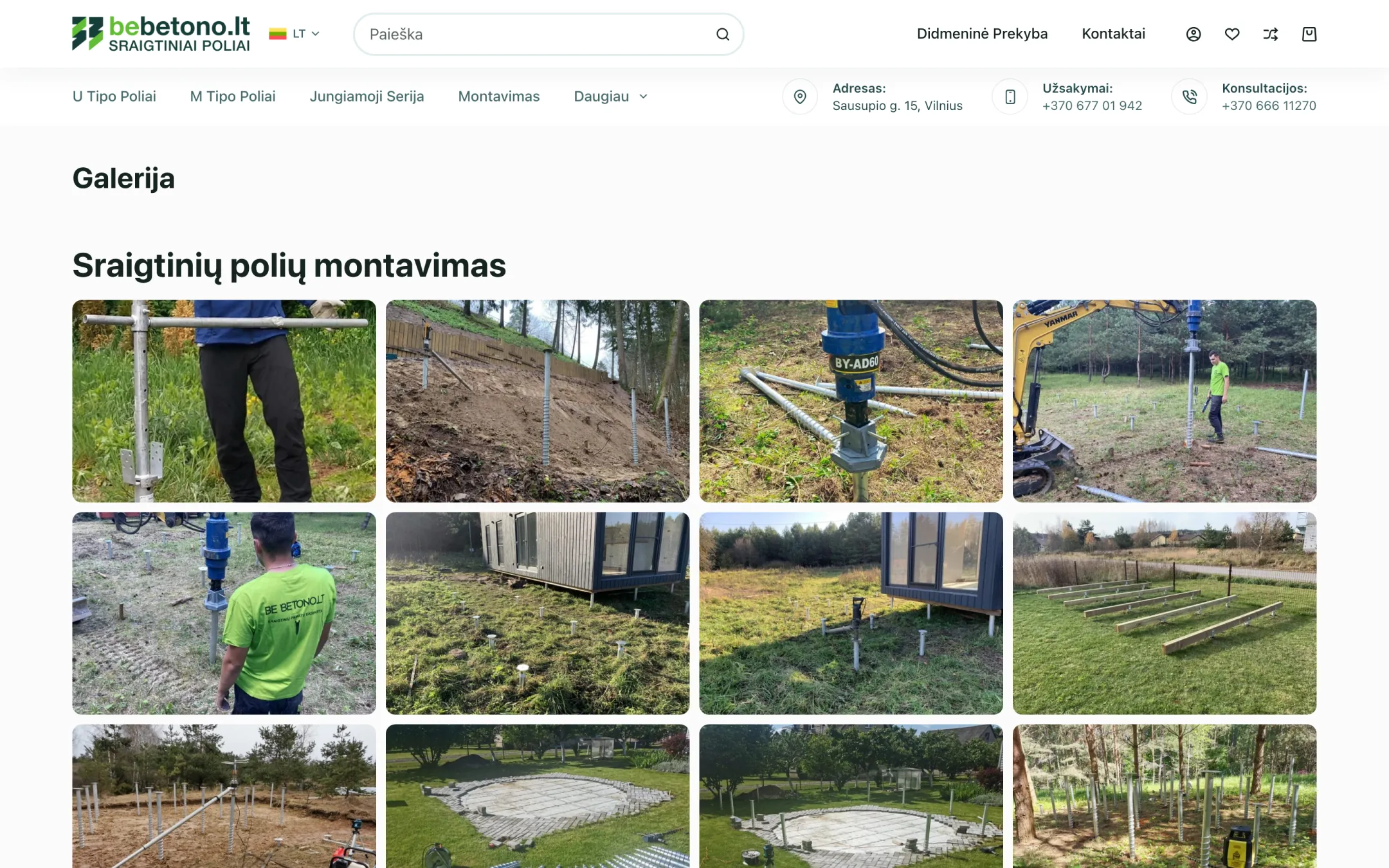
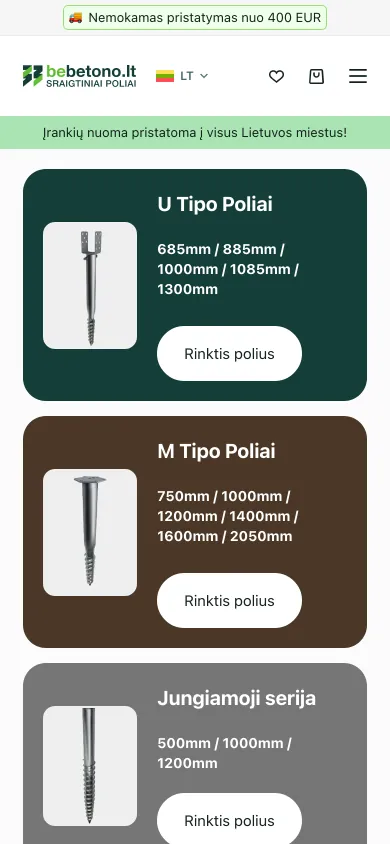
Be betono sells ground screws: the screws, the connecting series, installation equipment rental and an installation service. The same store runs in five languages across five domains: bebetono.lt in Lithuanian, dogroundscrew.com in English, bezbetonu.pl in Polish, ingenbetong.se in Swedish and dogroundscrew.nl in Dutch. A string is written once and translated, not copied five times.
We did not build the store; we took it over to maintain and extend. That means every fix has to fit into someone else's house: a theme, plugins and a calculator we did not write. So the first question before any job is not how to do it, but whose code this is, and only our own part is changed directly.
Custom code, kept apart from everyone else's
Everything we wrote is kept in one place, apart from the theme and other people's plugins. That way it is clear what is ours, and updates do not wipe it out.
That is how all our website maintenance works: changes are tried out away from the live store first, and a backup is taken before every job. Every change is recorded, so later it is clear what changed and when.
A calculator that fills the cart
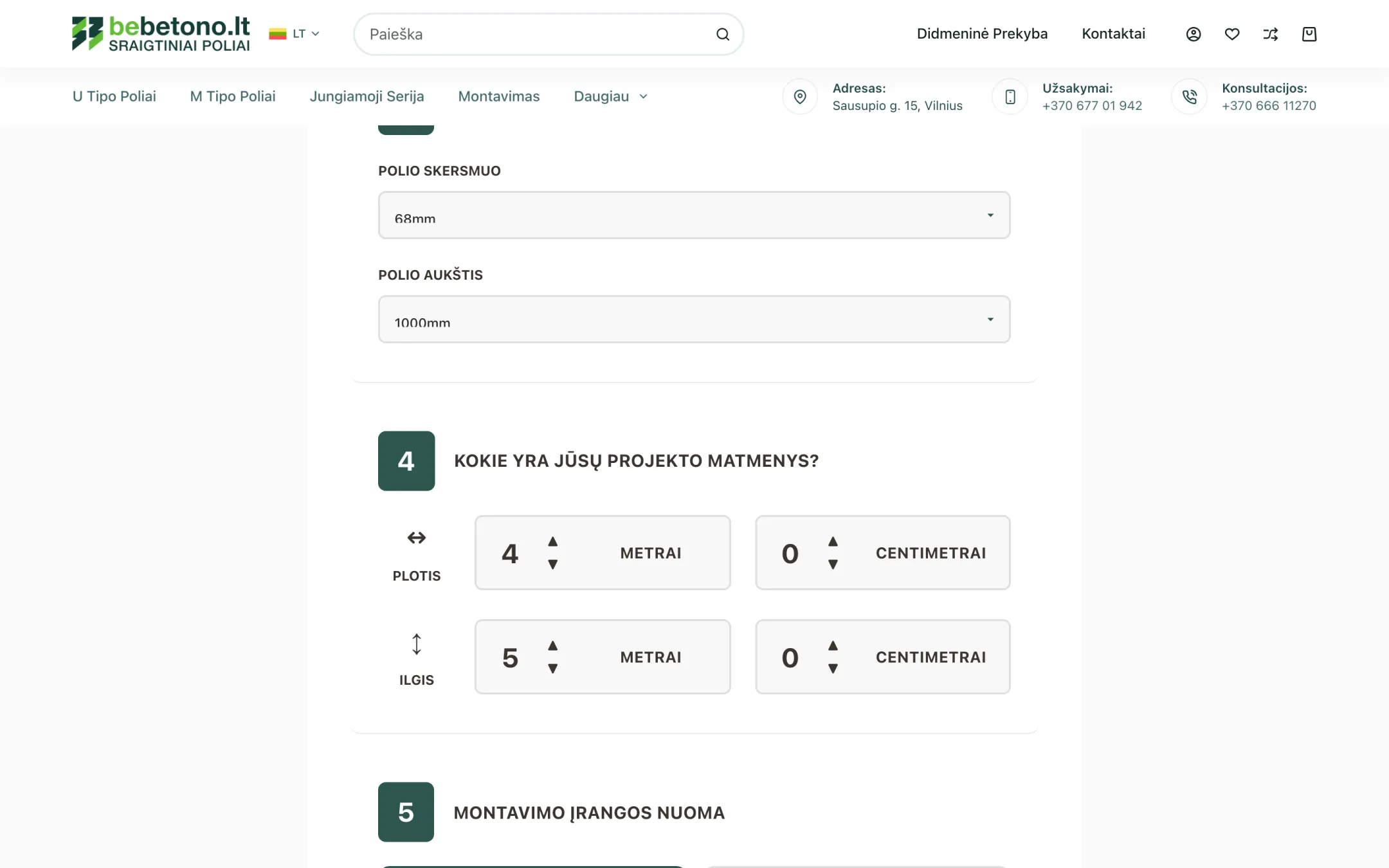
The screw calculator was written by another author: the buyer picks a type, a screw and the project dimensions, and the result travels into the cart. Our job was to connect it to the store so the cart works and the store stays secure.
For the buyer it looks simple: enter the project dimensions, the calculator works out the screw count and the total, and one button turns that list into a cart.
Gifts that no longer eat into the discount
The store has several gift rules: buy more screws or reach a larger total, and the installation equipment rental becomes free. The gift drops into the cart by itself, tagged and priced at zero, and if the buyer does not want it, it is removed like any other line.
What matters here is the discount base. It is counted from the purchase alone, so the discount matches exactly what the buyer pays for. The gift's price never enters the base and never lifts the tier. A paid equipment rental with chosen dates stays paid and does not turn into a gift.
Prices and stock, visible already in the catalogue
Every product card carries two extra rows under the price: what the item costs when the order is larger. The tier is visible before the cart, so the buyer does not have to work out whether a few more screws are worth it. On the product page the same rows stand beside the discount terms and the rental block.
Stock is shown without an exact number: the product page simply says there is enough. Comments are off across the store in every language. The same code of ours does all of this, and changes meant for the Lithuanian store leave the other countries' stores alone.
How to order a similar project
If you have a running store that needs fixing and extending, we start with two things: what is already running in it and how much of that is someone else's. That decides whether settings are enough or custom code is needed, and how big each change is.
This kind of work is custom development together with maintenance. We work with sites we did not build ourselves, and we keep our code apart from everyone else's. Tell us what is broken or missing in the store, and we will go through scope, stages and an estimate. Get in touch.