A WooCommerce store for the crafts of nine monasteries.
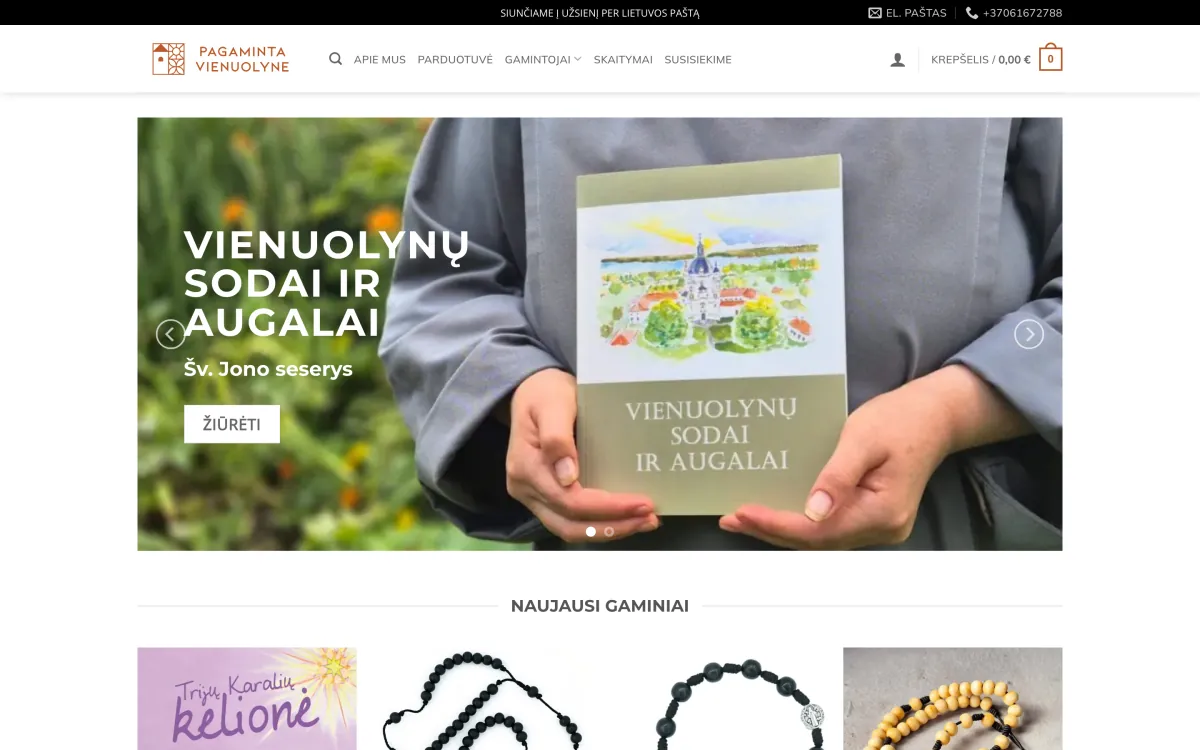
One store where the goods are made and shipped by different monasteries: more than 500 handmade products, a maker filter beside the categories, and a cart that splits the order into separate parcels, each with its own delivery price.
500+ handmade itemsfrom different monasteries in one store, each sending its own parcel
In short
- More than 500 handmade products in one store, from rosaries to books and scents
- The maker is a second dimension: a page of its own for each monastery and a field of its own in the filters
- The cart splits into parcels by monastery, and the delivery price adds up every sender’s rate
- A delivery option picked for each parcel: locker or courier
- A handmade piece is often the only one, so the product page carries the stock line
Screens
How it looks.


How it was built
The work.
A catalogue where a product has both a category and a monastery
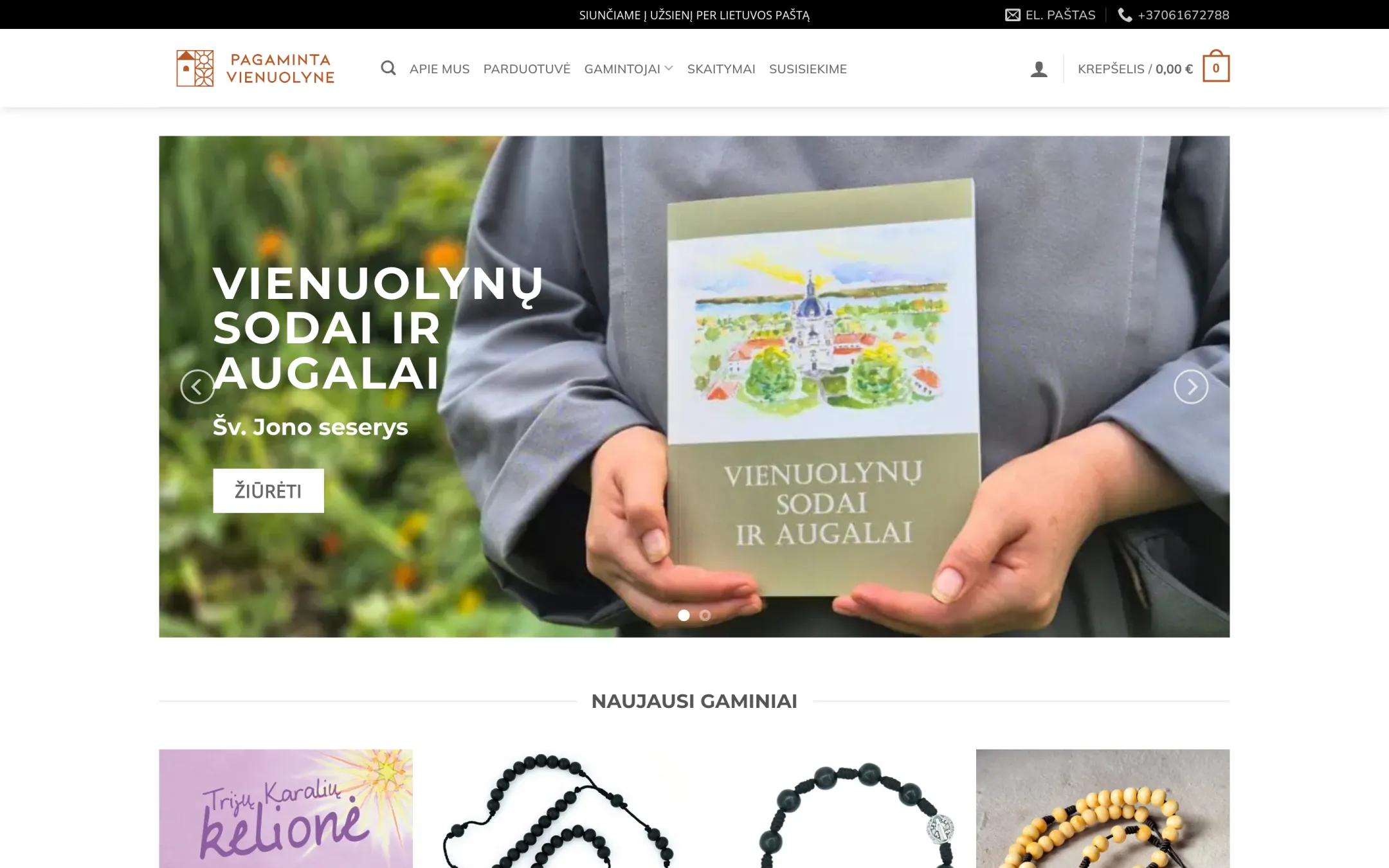
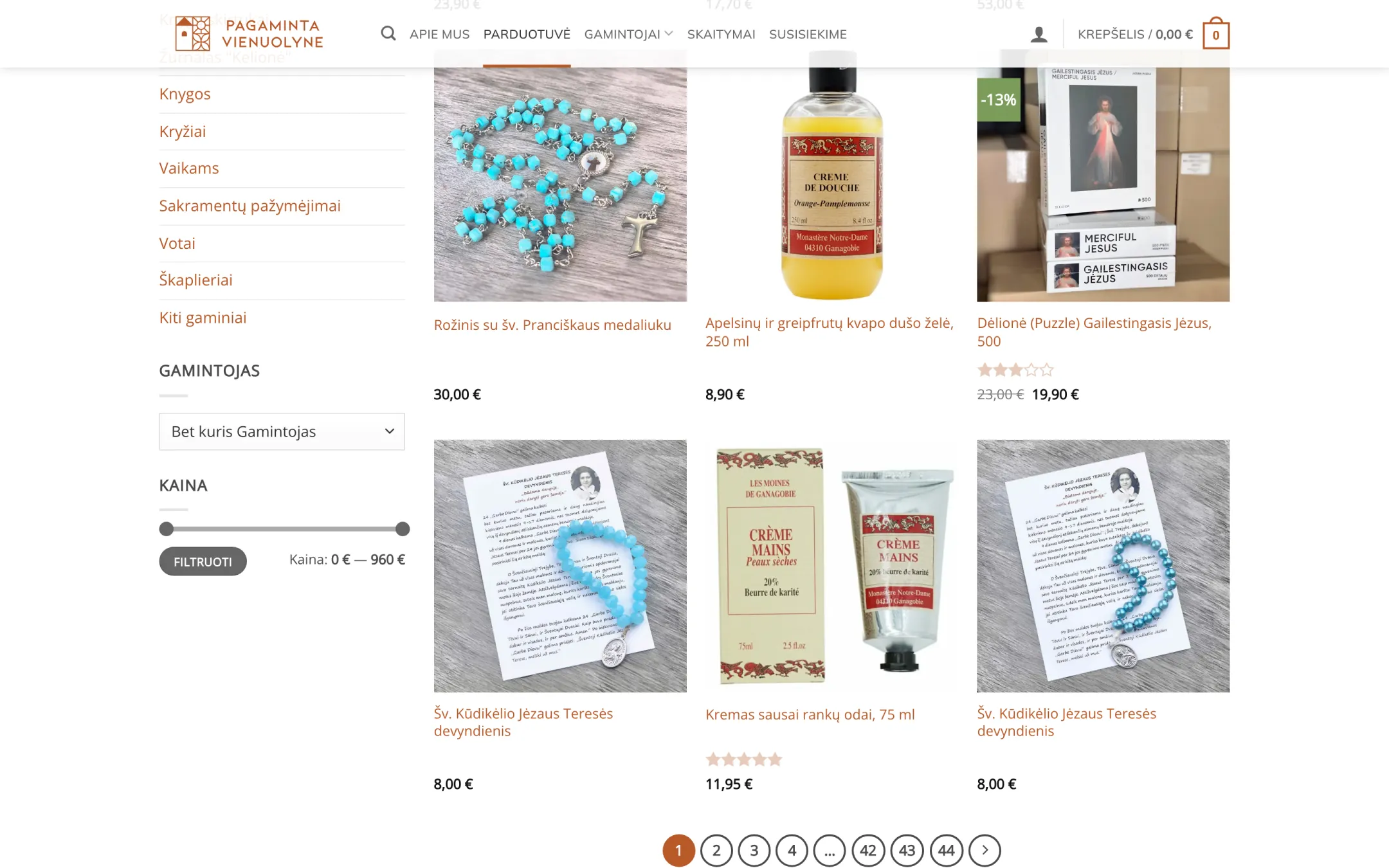
The store holds more than 500 handmade products: rosaries and bracelets, icons and pendants, incense, candles, cards, crocheted doilies, books, body care, and work in wood, dolomite, leather and sandstone. The category tree runs two levels deep, so rosaries split by the number of decades, and pendants into wooden, amber and gilded.
Next to the category every product carries a second dimension: its maker. The shop sidebar holds a maker field and a price filter, and the ordering goes by newest, popularity, rating or price. The same catalogue then reads two ways: looking for an object, or looking for a monastery.
A monastery page that leads straight to its own work
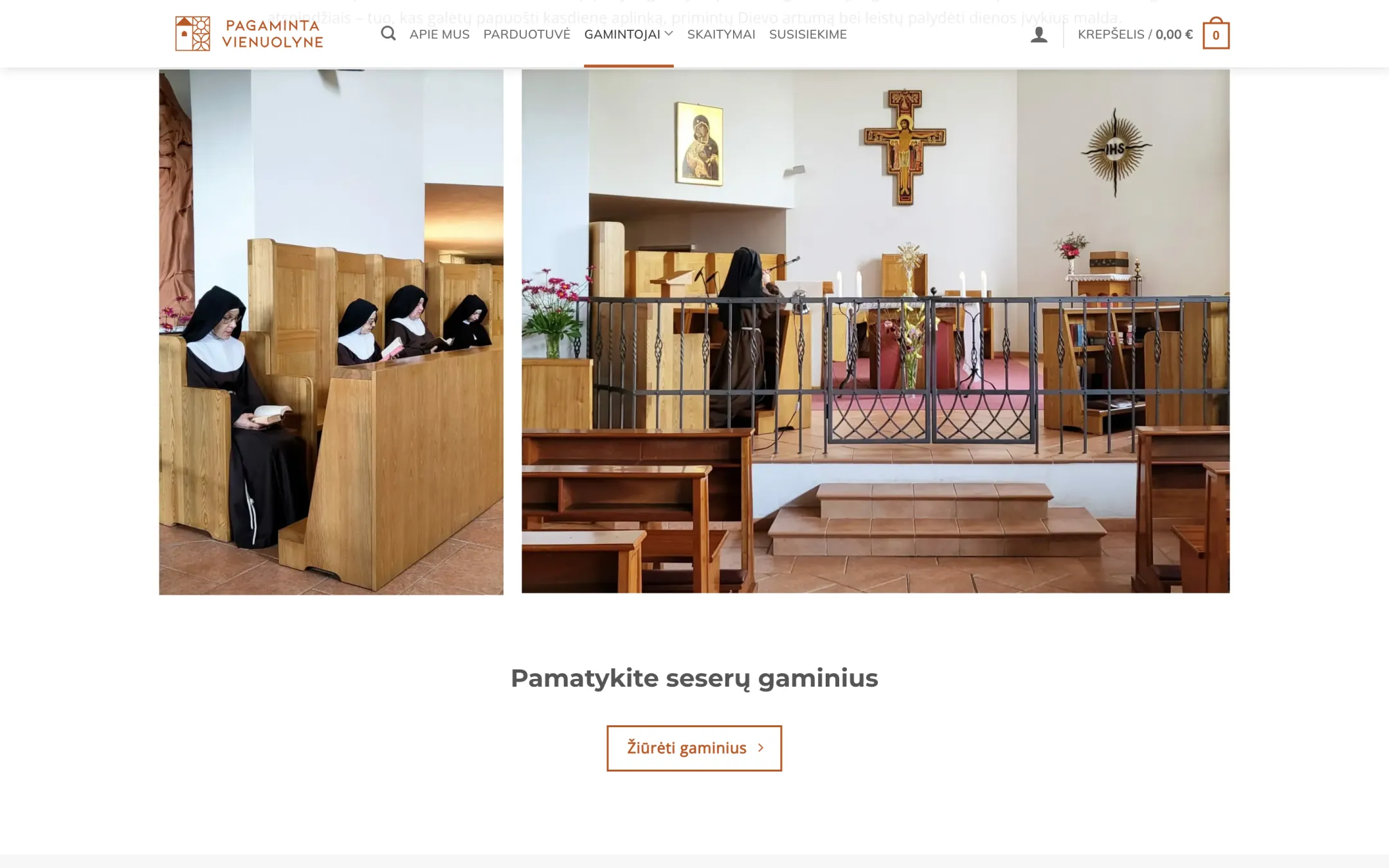
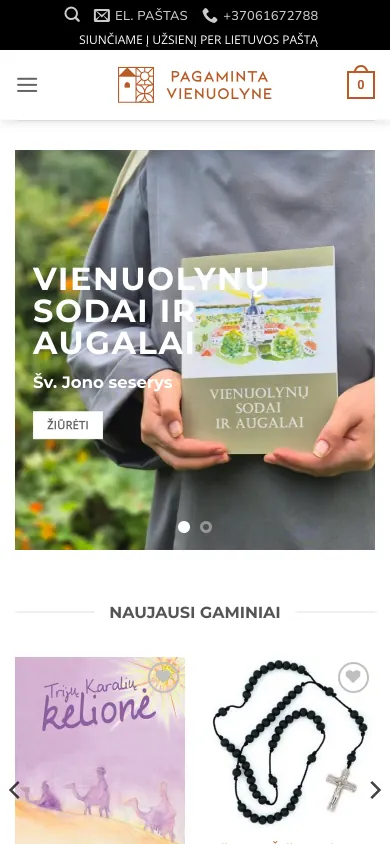
Every monastery has a page of its own with its own story: when the community was founded, how it lives, and why handwork matters to it. The shared makers page gathers them into one list with photographs and summaries, and each summary opens the full account.
At the bottom of the page sits a button that leads to the shop already filtered down to that monastery. Story and goods become one place: having read about the community, the buyer sees its work at once instead of going back to the general catalogue.
A WooCommerce cart that splits into separate parcels
The goods travel not from one warehouse but from monasteries in different parts of Lithuania, so the cart is split into parcels by maker. Add goods from two monasteries, and a notice about several makers lights up at the top, while the delivery line carries a separate rate for each parcel.
Every parcel is offered the same options: lockers and couriers. The locker is picked in the cart itself from the full Lithuanian list, so before checkout the buyer already knows both the final sum and the pickup point. The shipping terms say the same thing: the delivery price of a cart is the sum of every sender’s rate.
A product page for a one of a kind piece
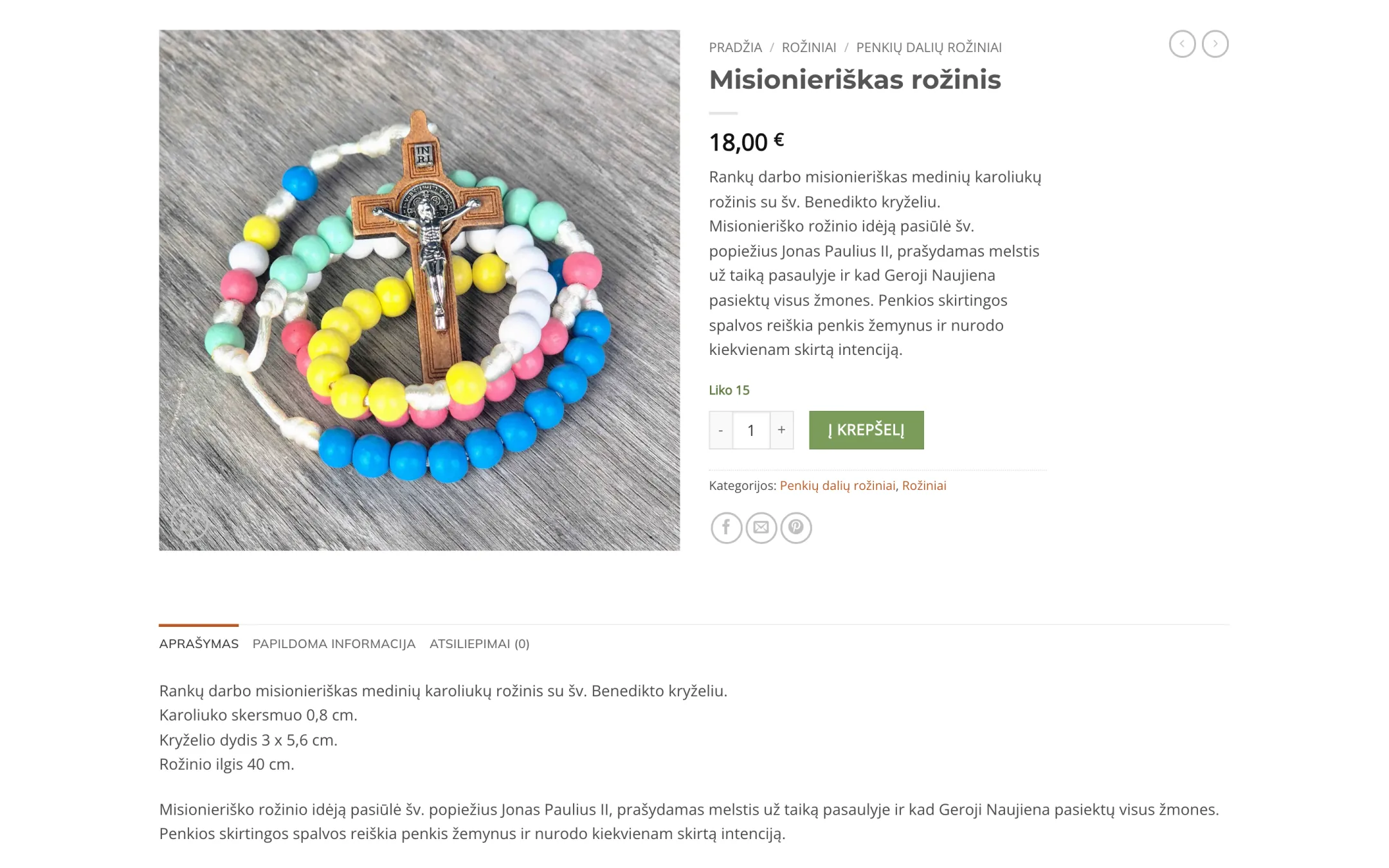
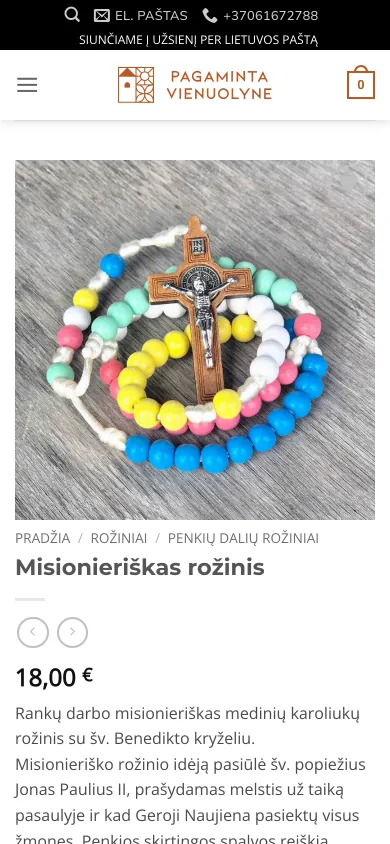
A handmade piece is often the only one, so a stock line sits under the price. The buyer sees at once whether the object is still there, and whether it is worth coming back later. A piece can be saved and found again in a list of its own.
The description carries what the photograph cannot say: the material, which community made it, and the exact dimensions. Beside the description open the additional information and review tabs, and below it similar work from the same monastery.
Payments, parcels and the terms of the store
Payment goes by bank or card, parcels within Lithuania by locker and courier, and abroad by post. The monasteries prepare the goods themselves, so the packing time is set out in the terms, while anything made to an individual order is agreed on separately.
Because the parcels leave at different times, the return window is counted from the delivery day of each product, and the terms of the store say exactly that. Beside them sit the privacy policy and the shipping terms, and questions go through a form with email and phone lines.
How to order a similar project
If several makers supply the goods, we start with two things: how the maker is described on the product, and how it shows up in the cart. That decides whether WooCommerce shipping classes are enough or rules of our own are needed, and with it the whole scope.
We do this kind of work as WooCommerce store development. Tell us how many suppliers you have, where the parcels leave from, and what the buyer should see in the cart, and we will go through scope, stages and the estimate. Get in touch.